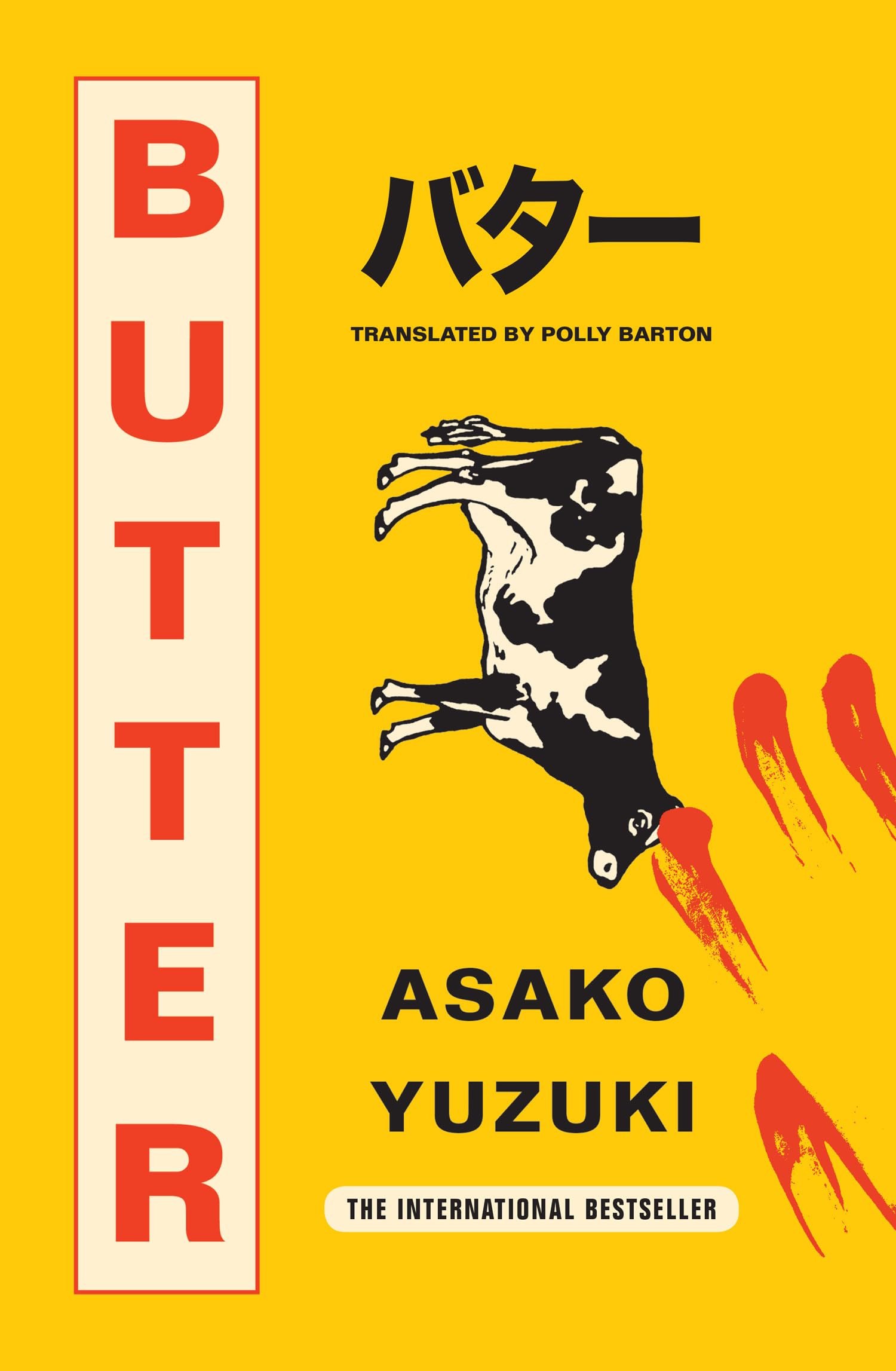
Book Review: Butter by Asako Yuzuki

Butter by Asako Yuzuki was originally published in 2017, in Japanese, it was translated by Polly Barton, and published in the UK in 2024, where it won Waterstones Book Of The Year, and is the company’s Book Of The Month for May 2025.
The story follows Rika, a journalist, who is trying to get an exclusive interview with infamous serial killer, Manako Kajii, in anticipation of her appeal. Kajii is renowned due to the nature of her crimes; where she seduced older men and had them finance her lifestyle, where she had champagne taste but a [tf is it] budget. And, supposedly, killed them once she had her fill of them.
While Kaji was not directly responsible for the murders, she was attributed to be the cause. as all three of her victims died after being in contact with Kajii.
But the other standout thing about Kajii was that she was fat, making the nature of her crimes all the more scandalous, as it demonstrated that plus-sized women could be desirable. This book made a huge impression on me as it dismantled and probed at the influence of the patriarchy in Japan and as a whole.
It was heartbreaking to be privy to so many stories throughout Yuzuki’s narrative, but through the main character, Rika’s journey, readers can understand the variety of ways the traditional gender roles and influences of a patriarchal society has on everyone. From Reiko, who left her job because she feared the stress was impacting her chance of getting pregnant, to Shinoi, a handsome, older man, higher up in the news world, and is viewed by outsiders as a lothario, who is only giving Rika help and information as he comes across it, because she is granting him sexual favours for her own success, instead of the truth, which is that he can’t use it himself without risking his own career.
This book had a lot to say about the concept of hegemony and what is expected of men versus women. While women are expected to be homemakers, capable cooks etc. malicious incompetence is acceptable from their husbands and partners. This is demonstrated throughout the various male characters in the story: when Yusuke is left to his own devices, admittedly in a distressing situation, he doesn’t eat well, or clean up after himself. I was outraged, heartbroken and immensely frustrated by many of the male characters in this book for expecting things to be done for them. It was ridiculous.
I really enjoyed the way that Rika and Kajii are at blows, neither seems to be able to best the other in this battle of wits. I found the way that the story progressed, with Rika desperate to get an exclusive interview with Kajii, she is effectively eating out of her hand.
There are so many layers to this story, from the value of community and friendship between Rika and Reiko, and later, her extended network of colleagues-turn-friends, to self-love and body image, to anecdotes about food and nourishment, and the uncovering of a master manipulator and the understanding of her ways.
I love the foreshadowing that comes within the story of Little Babaji, a tale that is referenced throughout the story; a children’s tale where a boy goes into the forest and is set upon by four tigers. The tigers, desperate from their hunger, set upon each other and scrap, running around in circles, until they turn into butter.
This book was fantastic, and was a great, engaging read! It was exceptionally thought-provoking and well-deserving of the Waterstones Book Of The Year award!
 Imogen L. Smiley