Language, Literature, and Accessibility: Are You Isolating Your Audience?

Reading should always be for pleasure – but when you’re in education, you don’t have the option to choose what texts you study.
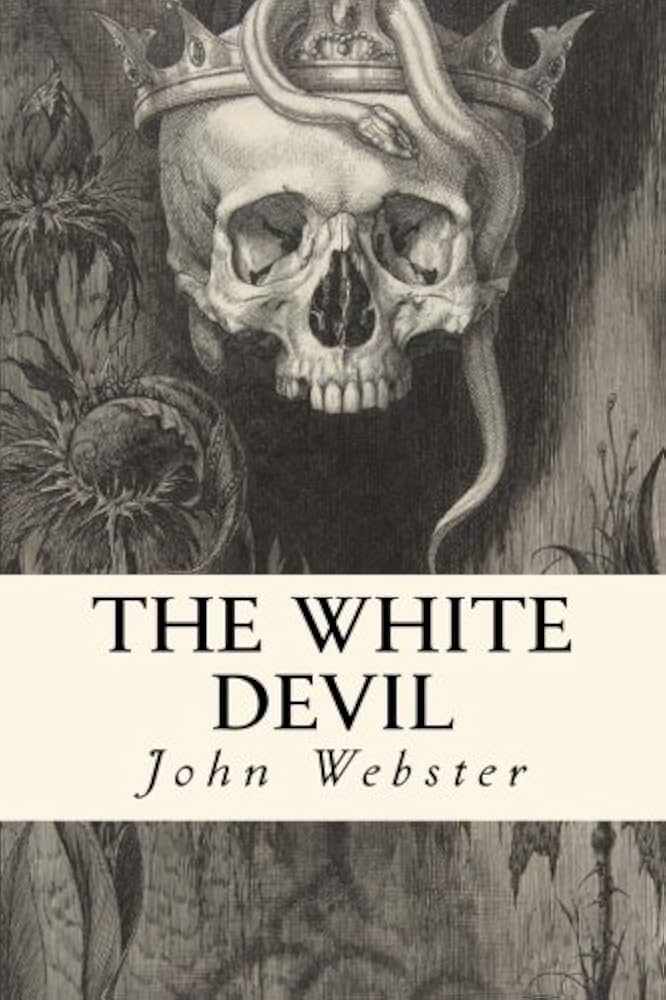
John Webster’s ‘The White Devil’ is a play from the 1600s. It is a pre-gothic text and one I studied in 2016. I was expected to memorise quotes from this book and two others, for a closed-book English Literature exam.
In order to ensure I memorised the quotes and could apply them in context, a lot of my revision was colour-coded, and had a number of keys along the side of it: stars, hearts, crosses, and other symbols referring to potential topics and themes I may encounter in the exam, while colours were assigned to the various characters. But I didn’t get it down to a science until I began translating the quotes I needed from archaisms to something modern.
An example that, almost a decade later, I can recall without hesitation is the antagonist remarking “Am I your dog?” when he is asked to obey and adhere to the wants and whims of his Lord. I contextualised it by changing “dog” to “bitch”, to ensure I was clear that it wasn’t about loyalty, it was about obedience.
I hadn’t considered the idea of literature through the lens of accessibility, until I attended a performance on the West End, called ‘Shit-Faced Shakespeare’, which highlighted how getting one of the actors drunk when they attempt to perform a Shakespearean classic made the plot easier to digest. Even though I had been unconsciously ensuring I could access older texts by making them accessible throughout my studies, particularly, ‘The White Devil’, where I had an A3 sheet of multi-colored scrawl pointing to themes and characters. My English teacher even photocopied it to distribute among the rest of my class and saved it as a resource for future cohorts, though, I cannot say for certain whether it was used.
Having the actors improvise and adapt the script and events of the play to go along with what their intoxicated colleague said, allowed the audience to understand the story in a way that reading the works in a classroom would have done.
However, there is a line between being well-spoken or well-read and isolating a prospective audience by using language that is too highbrow or archaic. The use of pre-gothic texts in my English Literature exam proved that. While I pride myself on my vocabulary, I am not a dictionary or a thesaurus.
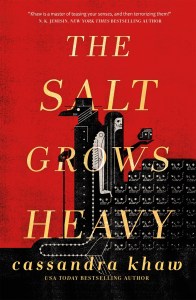
I hadn’t encountered a book that I had to sit and read with a dictionary beside me since I was a child until I read a short story by Cassandra Khaw. Although I indicated as such in my review of my first book by Khaw, ‘The Salt Grows Heavy’ (2024), I felt like Khaw threw me out of the story every time I had to wrench myself out of the prose to Google definitions. It was, for me, a real hindrance to the reading experience.
While the first two sentences have a hook, which draws a reader in, using dialogue and an immediate reaction, the third sentence is like running into a brick wall due to the scope of Khaw’s vocabulary.
“In the penumbra, the fading dusk gorgeted by coral and gold, you could be forgiven for mistaking the ruined house a ribcage, the roof its tent of ragged skin.”
In that sentence alone, I had to Google two definitions, both of which would have been just as impactful with synonyms. ‘Penumbra’ means lightly shaded area, and ‘gorget’ means a patch of colour on the throat of an animal, or, alternatively, refers to a piece of clothing that covers someone’s throat.
If I had encountered that sentence in a workshopping session at university, I would have proposed the sentence be revised. And, if asked to suggest tweaks, I would have given an example of:
“In the shadows, with the fading dusk obscured by coral and gold, you could be forgiven for mistaking the ruined house for a ribcage.”
As a secondary school student, I was told that while my oral vocabulary was advanced and vast, the words I chose to write during assessed work, lacked that same confidence. I was encouraged to use a wider vocabulary, and to achieve this, I curated a small notebook of words I didn’t know the definitions of or sometimes doubted I was using correctly, all in one place, like a mini-dictionary, which I studied during writing exercises in class to improve my written answers. My marks improved by doing this, and my confidence in my writing, my ideas, and my answers improved along with it. While I am not used to needing to do this, as an adult, I appreciated the opportunity to learn one or two new words in a short story.
The issue was that Khaw used an extensive vocabulary like the sentence above, throughout her prose. This became immensely irritating at times, as I was being thrust from the action, questioning what a word meant. I would argue that in the instance of ‘The Salt Grows Heavy’, Khaw excludes a vast amount of her prospective audience by using this kind of language because not everyone can understand the language she uses, nor has the time, patience, or willingness to entertain needing to look up definitions from the third sentence of a short story onwards.
It was this use of vocabulary that made me struggle to understand the events of the story, and had to reread whole passages to ensure I knew what was going on. This is a problem for readers. I am confident in my vocabulary as a writer, and during my studies, was reassured that sometimes the best words are the simpler ones. I believe that Khaw’s 2023 work could have really benefited from this advice during the editing stages.
While I can’t speak for Khaw, or any other writer who has had their work criticised for their language choices, I would argue that by using a lot of older, lesser-known words, it can throw people from the narrative, with people citing a variety of works for the same issue. In my personal opinion, being precise and clear is best, because it gives the most people the best chance of falling in love with your characters and your story.
 Imogen L. Smiley