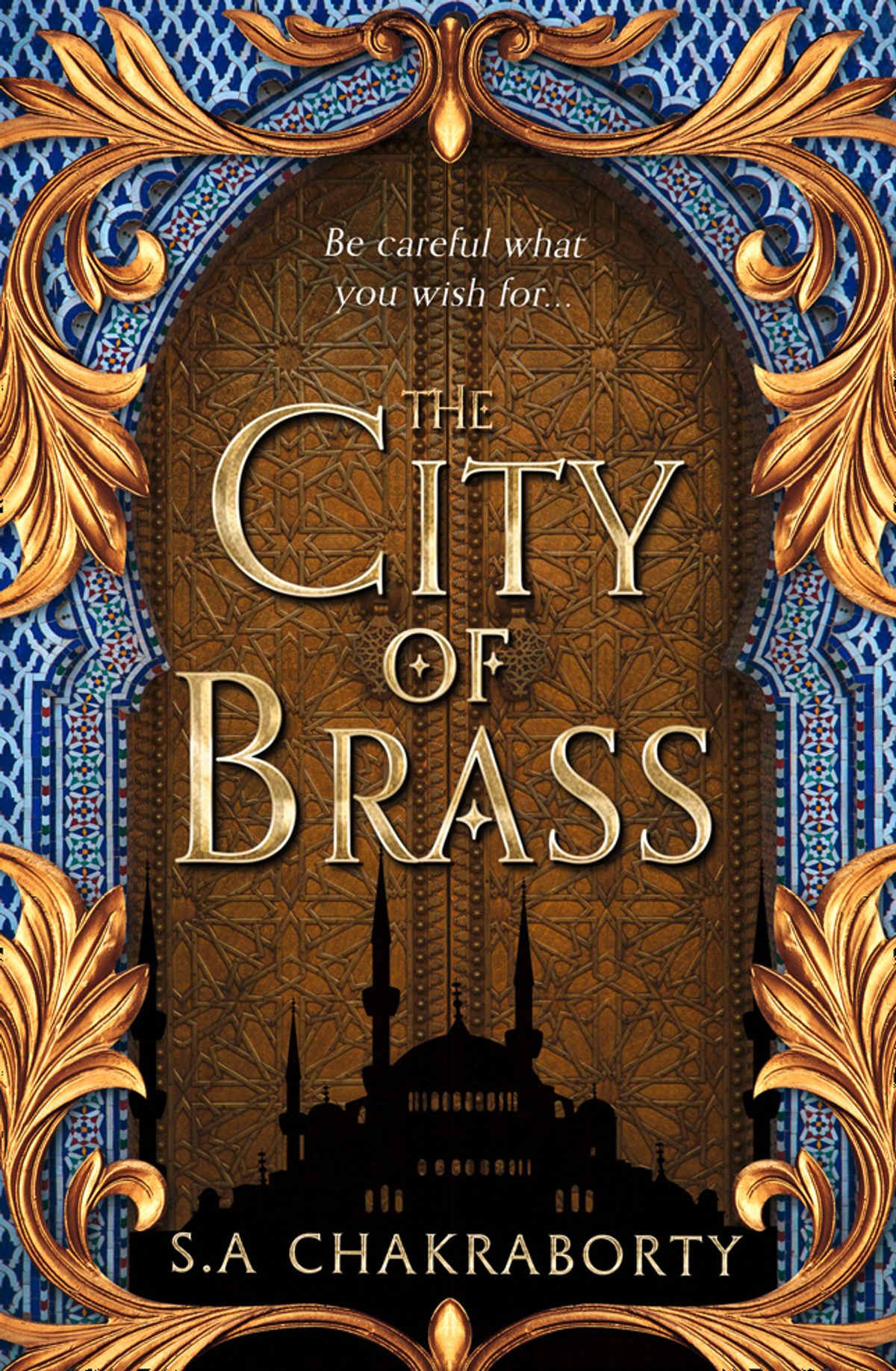
Book Review: The Daevabad Trilogy by S. A. Chakraborty
The Daevabad Trilogy by S. A. Chakraborty consists of ‘The City of Brass’ (2017), ”The Kingdom of Copper’ (2019) and ‘The Empire of Gold’ (2020). It is a split-narrative series, but primarily follows a twenty year old Egyptian woman called Nahri as she struggles to make a living in Cario as she dreams of being a doctor, but can’t train in medicine due to her sex and her impoverished background.
This series contains some heavy-handed material, including the idea of human trafficking, slavery, and abuse. Please be mindful of your triggers when you’re reading this series.
Nahri is a peculiar woman with strange talents, she can sense illness in the people around her, though she is often powerless to help them. While some of her patrons are paranoid and receive treatment as a placebo, she has helped people with her talents, sending the ill and the well to her business partner Yacob, an apothacarist. But after a demonic cleansing goes awry, Nahri inadvertently summons a long-dead djinn to her aid, the Warrior, Darayavahoush e-Afshin, who upon encountering her, feels obligated to take her to her true homeland of Daevabad, a magnificent city where Dara once lived and served sacred and favoured healers called the Nahids from which Nahri is descended.
Meanwhile, in Daevabad, King Ghassan Al Qahtani struggles with political unrest among his people, the second-class citizens of Daevabad, the shafit, born of djin and humans and forced to live in Daevabad, are rebelling. A small group of shafit, called the Tanzim are being mysteriously funded, and gaining influence among the people. What Ghassan doesn’t know is that the mysterious benefactor of the Tanzim is none other than his youngest, Alizayd Al Qahtani, an idealist who dreams of a fairer Daevabad, and is unknowingly funding the smuggling of dangerous, human weapons into the city, under the guise of feeding orphans and saving pureblooded passing shafit from being trafficked and sold to rich and influential families.
I loved Nahri and Ali’s characters. They were layered and nuanced, with a lot of internal conflicts to grapple with throughout all three books.
While I was of the opinion for most of ‘The Kingdom Of Copper’ that the nature of the book was to act almost like a spacer between the first and last book of the trilogy, I was greatly mistaken. Despite the shift in tone and focus, where Nahri and Ali are not necessarily fighting for their lives, there is a deeper resounding aspect to this book, and it’s split narrative style was exceptional as it provided great moments of dire dramatic irony that were divine to watch unfurl. I, while skeptical at the start, loved this book. It doesn’t fall victim to the dreaded second book slump and was fantastic to read!
Dara’s character development was fantastic, going from living centuries ago, and holding the Nahids to an incredible standard, to coming to accept that everyone is human and makes mistakes, and choices that aren’t desirable. He struggles with trauma and fear, while wanting to do what is right by Nahri throughout the series. I felt so bad for him throughout the story, and when things surely couldn’t possibly get worse, they do, in despicable and mortifying ways. As a morally grey and emotional character, Dara was so complex and interesting to read, and while I didn’t necessarily like him as a character, he didn’t deserve what happened to him.
This series is nuanced and layered with a lot of heavy lore and world-building, and while the politics of the story was fantastic, I feel like it would be easy to find yourself asking questions about how things happened, particularly as more questions crop up in the latter books.
There was such a beautiful romantic quality that came from the strangers-to-friends-to-strangers-to-friends-to-lovers arc, and Chakroborty’s use of dialogue to express the deep-set yearning between some of the characters gave me chills. I loved how she navigated the complicated world of aristocratic relationships and political leverage. The way she expressed the idea of being loved, or known or seen as a weakness was so visceral and evocative. I loved how vulnerability had to be earned among her characters! It was fantastic!
I would wholeheartedly recommend this trilogy. It is an interesting, rich fantasy series with complicated characters and bucket loads of angst, pining and yearning. I loved it.
 Imogen L. Smiley