Book Review: The Honey Witch by Sydney
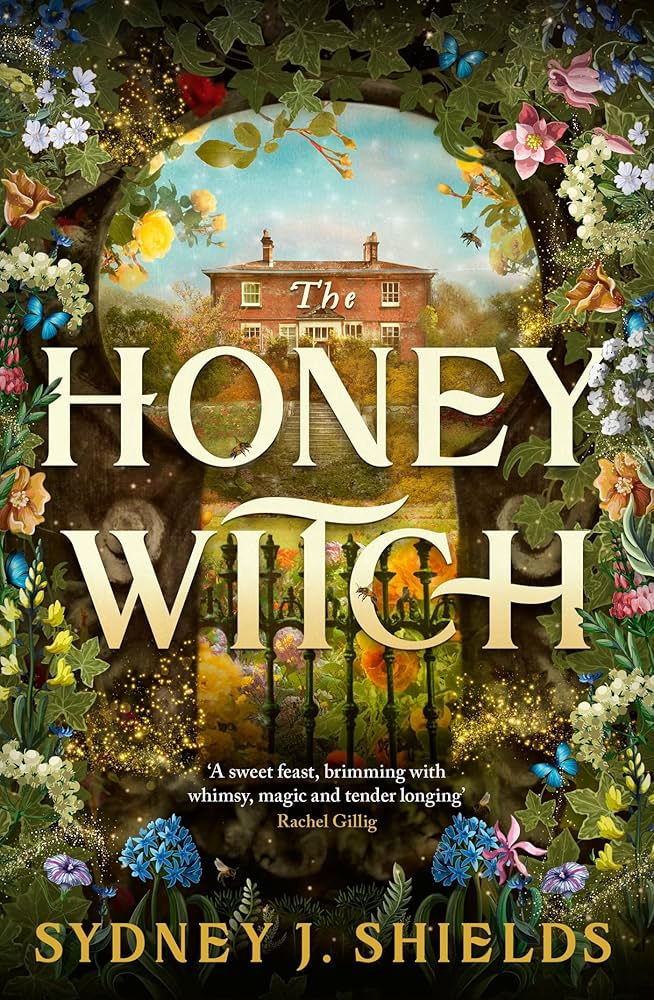
‘The Honey Witch’ by Sydney J. Shields was published in 2024. I became familiar with it via TikTok before the book was released, and couldn’t wait to get my hands on a copy.
It is a sapphic cosy fantasy which follows Marigold, as she discovers that the reason she felt so different from her talented younger siblings as she grew up was not because she was strange, or simply boring, but because she was a witch and destined for something greater.
She, like every firstborn daughter, is a honey witch, and while one can choose to leave her power dormant, Marigold feels a thirst for this power. But it does have a cost; a honey witch is cursed so nobody can ever fall in love with her.
Stifled by her life in High Society, Marigold considers this a perk, but after leaving her immediate family with her ailing maternal grandmother, Althea, and moving far away, she realises the gravity of her choice. Which only grows after Althea passes away. She comes to understand the extent to which she is cursed.
When she meets her childhood companion, August, and his friend and adoptive sister, Lottie, her lonliness is quelled, but only temporarily. She comes to a solution when August returns after a period away, having been spurned by his lover, and seeks a spell to mend his heartbreak, which Marigold happily provides. She later offers him one better, a spell to help him find his soulmate, which he will only provide if he and Lottie stay at Marigold’s lonely cottage until it is complete, and Lottie, a skeptic when it comes to magic, accepts that Marigold isn’t a quack using ‘mythcraft’, but a real witch.
Lottie and Mari’s love story was beautifully written, in a queer normative version of the regency era, there is a lot of heavy imagery and poeticism within the language that echoes the aesthetic of the book. Shields’ use of metaphor and imagery was fantastic and added so many layers of yearning in Mari’s narrative.
I loved the pacing, and while there is a looming threat on the horizon throughout the book, it is more about the immediacy of Mari realising how desperately she wants Lottie to love her, and how both women seek to undo Mari’s curse.
While I anticipated the twist early on in the story, I didn’t find it too distracting from the narrative, as I was so enthralled with the way that Shields used language to create a haven of magic and whimsical wonder. Instead, I found myself slightly annoyed that it took Mari and Lottie so long to realise the twists ahead, and shouting at the book while still furiously turning the pages.
This is a beautiful story which provided a great sense of immersion, and I really enjoyed reading it. I’d definitely recommend it!
 Imogen L. Smiley