
Reading Like A Writer: Examining ‘Powerless’ by Lauren Roberts
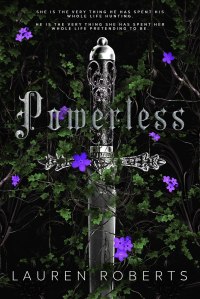
A wise university lecturer once told us that writers learn more about their craft from reading books they didn’t like, than from the ones we do. At the time, I didn’t necessarily appreciate the sentiment behind the phrase, and struggled to apply this teaching to my practice, however, I believe I recently found a book where I have been able to learn what exactly I need to keep an eye out for in my own novels in the future.
But, which book was it? Unfortunately, the book I am referring to is a Booktok darling, ‘Powerless’ by Lauren Roberts. It was published in 2023, and is the first book in a series with the same name, consisting of ‘Powerless’ (2023), ‘Reckless’ (2024), and ‘Fearless’ which was published in April.
While I already shared a book review that covered some of the things I felt about the book, aspects of the book have continued to make me wonder why I felt such a strong disconnect with the book.
I am not a DNF-er, I am a ‘finish a book, come Hell or high water’ kind of reader, because something I learned while I was studying the craft at university, was that books we dislike are much more valuable as a writer, than books we love, because you can learn why we dislike something and learn from the things we dislike.
I read the first book in the Powerless trilogy in anticipation of the release of ‘Fearless’, having heard amazing things about books one and two on TikTok. I went in with high expectations. These expectations, unfortunately, were not met, and I knew, from within a few chapters, that I was unlikely to read past book one.
I think, even though the ‘Powerless’ series by Lauren Roberts wasn’t for me, as a reader, and even if it was for you, this brief dissection of the book will allow prospective authors to acknowledge and edit their own work with the below observations in mind.
There were a few reasons that this book didn’t do it for me. But my main one was that I lacked the suspension of disbelief, meaning I couldn’t imagine or believe that the events in the story were taking place. Not because I didn’t understand the world, or the circumstances that brought the events to pass, but because I couldn’t quite picture it. It lacked, in my opinion, consistency in time and place.
While I have read an array of fantasy books with varying subgenres, but I struggled to imagine the kingdom of Ilya as there was a vague mishmash of descriptions and details, making things hard to pinpoint; Loot Alley, the slums, where the protagonist calls home is described as having had a lampposts, which are lit by bulbs, but the Elites travel in carriages. Aesthetically speaking, the Fort, where Paedyn and her best friend Adena sleep is described in a way that had me imagining a the barricades in Les Mis or R. F. Kuang’s ‘Babel’ (2022). Similarly, Elites known as Volts, can manipulate electricity, and rebels are familiar with bombs, and how to manufacture them; while during the Trials, characters attend extravagant balls that require custom-designed gowns from seamstresses and modistes, implying a different era of fashion. Yet, at the same time, the protagonist wears “tanks”.
And don’t get me started on hair colour. Various female characters have dyed hair, including Paedyn, herself with her iconic silver, yet she is homeless with no financial means to acquire silver dye, bleach, let alone being able to access clean, running water with which to dye her hair. Pedantic of me, perhaps. But are readers expected to believe that Paedyn’s silver, like Blair’s lilac hair and Andi’s burgundy hair, are products of genetics? There were a lot of potential, unexplored contradictions. And, with these contradictions on display and with otherwise vague descriptions of the world, Roberts seems to lack a concrete sense of place and time.
This was further demonstrated through Roberts’ choice of character names. Having read the audiobook, I was surprised that the female lead’s name was Paedyn, as opposed to the phonetically similar Payton, and while Paedyn’s name stood out as a bit different, what threw me was the names of Ilya’s Princes: Kitt and Kai. Now, those names threw me, because, they gave very little insight into the geographical coding of Ilya, and, furthermore, lacked the elegance and history or whimsy readers tend to expect from fantasy books.
As an avid fantasy reader, I have come across many different kinds of names. Names are meant to roll of the tongue, Alizade Al Qahtani, for example, or Prince Alizade, who appears in the Daevabaad trilogy is a great example. His name provides a sense of place and flows well. Robert Baratheon from Game of Thrones is another good example, even with the spiel that comes along with his full name and title: King Robert I Baratheon, first of his name and ruler of the Seven Kingdoms, because the phonics of his surname flow well, in contrast with the harsher and familiar sounds of his given name. And yet, then there are the Princes in ‘Powerless’, Kitt and Kai. Prince Kitt Azer and Prince Kai Azer.
It strikes me, what self-respecting monarch names his heir Kitt? Espeically, knowing that as his heir, he will be known as King Kitt? Unless, of course, after an entire book, Kitt, like Kai, is short for his actual given name, like we did with Prince Kai. But, even then, Roberts named her protagonist’s primary love interest Prince Kai? Furthermore, the entire nation seems committed to calling himPrince Kai, yet, as I said, with reference to Kitt, we learn after at least half the book that Kai’s full given name is Malakai. Yet, everyone in the sovereign nation calls him Prince Kai. This also struck me as strange, considering in Britain, you don’t often find people referring to Prince William as “Prince Will”, even if they do shorten his name to ‘Will’ when referring to him and his wife.
I would argue that these elements were perhaps the most glaring ones that kept me from reading ‘Reckless’ and subsequently ‘Fearless’, however, there were a few more. Primarily, the style of writing wasn’t for me. There were several, areas of the story, where, had this book been handed to me to workshop, I would have suggested making significant changes. However, before I go into the details, I will admit that I may feel this way because I may not be the desired target audience for Roberts’ book, and while I have issues with the way the prose read, that does not make her a bad writer. I simply might have gone into this book expecting it to be something it wasn’t, and therefore found myself frustrated.
The language, and Roberts’ choices fell a bit flat for me. The story seemed to be repetitive and heavy-handed, using the same phrases and imagery throughout, such as Paedyn having “ocean eyes”, and the repetition of the ways Kai and Paedyn were opposites while Kai struggled to accept his budding attraction to her. I would also propose that the scenes where Kai and Paedyn held daggers to each other’s throats occurred too many times to have the same sultry appeal I believe was the intent, with it occurring as often as it did, I believe it eradicated the gravity and tension that came from the act of holding a knife to the throat of your love interest.
Saying that, for me, the greatest perpetrator of unnecessary word choice, and overuse was the constant use of the phrase “standing to [their] feet”. That phrase easily appeared a dozen times, but likely more. My issue is simple: is it not implied that each character stands on their feet? Perhaps if Roberts had changed this phrase to any variation of “stood up”, there would have been enough excess words to provide a clear and immersive description of the kingdom of Ilya.
‘Powerless’ by Lauren Roberts wasn’t for me. And, while it is a BookTok darling, it taught me something else, and reminded me to go into books, not just as a voracious reader, but as a writer.
 Imogen L. Smiley