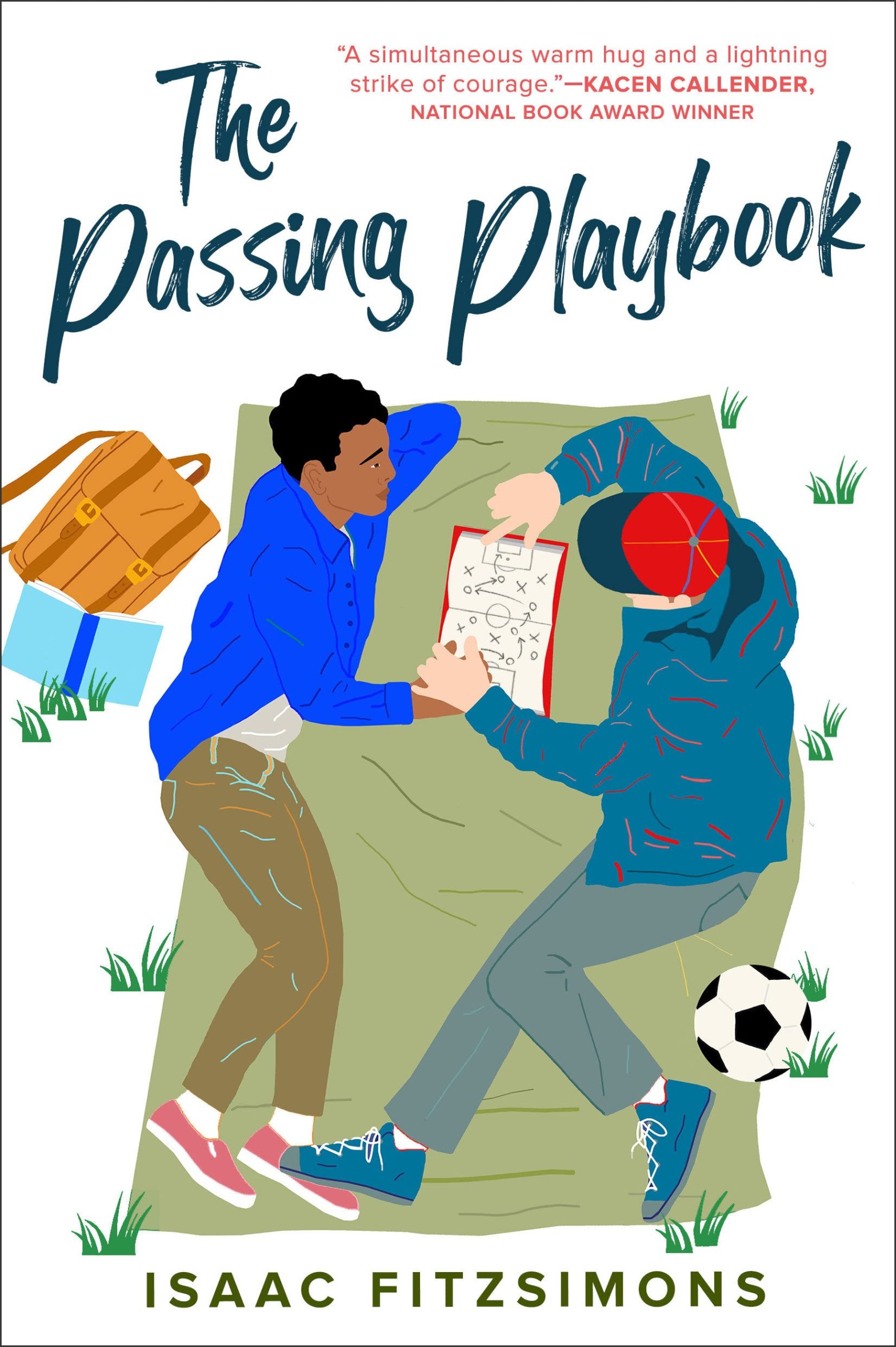
Book Review: The Passing Playbook by Isaac Fitzsimons
‘The Passing Playbook’ by Isaac Fitzsimons was released in 2021. It was his first novel and tells the story of a transgender teen, Spencer, who moved to an expensive private school after a threat was made to his life due to his identity at a previous school. When he joins Oakley, he declares that for his own safety, he will “go stealth” and rely on his ability to pass as cisgender to stay under the radar. A plan that gets thrown awry after he kicks a dodgeball at a boys head during gym, and is faced with an ultimatum: either join the school soccer team, and have the very deliberate dodgeball to the head stunt written up as an accident, or face the wrath of the principal and her zero-tolerance to violence policy on his first day. Oops.
Fortunately for Spencer, he loves soccer, and quickly falls into step and befriends his teammates, perhaps becoming more than friends with one Justice Cortez. But this is conservative, rural Ohio, and the town is deep in the clutches of literal interpretations of Christianity, meaning that the budding romance between Spencer and Justice could go off the rails at any point, but they’re both too invested in each other to let it stop them.
The story focuses equally on the comradery of the school soccer team, the friendships Spencer forges with Macintosh, Micah, and the other boys, and navigating his first romantic relationship. But as their relationship gets more serious, the threat of being outed to his incredibly strict parents looms over Justice’s head, and when he is threatened by a girl at his church, he has big decisions to make.
I liked the friendship that the boys have in this book, for example, how Macintosh immediately notices that Theo, Spencer’s autistic brother, will be overwhelmed in the games room when the team congregates for the team potluck, and takes charge, taking him to the movie room, where he won’t be disturbed, and can also play his nature documentaries from his iPad on the big cinema screen. It was heartwarming to see these teenagers accommodate Theo without knowing the scope of what he needs, but they are intuitive enough to see that he may be comfortable temporarily, but not long-term in a space like the games room. It’s sweet and thoughtful.
Furthermore, the overarching theme of discrimination and how Spencer navigates joining the boys’ soccer team is gut-wrenching, because you can empathise with his parents’ panic and frustrations of wanting him to be safe, despite knowing how empowering soccer is for Spencer. Just because Spencer is a fictional character doesn’t mean that you as the reader, especially if you are trans, or are friends with trans people, don’t feel the same range of emotions and conflicting feelings.
What I found interesting about this book was that the main antagonistic forces for Justice and Spencer are institutions, not bitchy teens that lord over them. Spencer is being kept from the sport he loves because Ohio won’t allow trans teens to change their sexes on their birth certificates, and Justice is under the thumb of a conservative church community that helped his family through their darkest days and feels indebted to the people who would condemn him to an eternity in Hell for his sexuality. Usually, when an institution is to blame for overarching issues, it’s a dystopian novel where a teenage, usually white girl is suddenly dubbed the chosen one and can free the oppressed people that surround her. But, what this book does, without using those same ideas, demonstrates clearly that being stuck unable to be who you are, love who you love, and do what you want is a dystopia of its own. It’s incredibly poignant.
I also found the conclusion incredibly rewarding, it isn’t all sunshine and rainbows, but Justice is pursuing the path best for him, as is Spencer, whose anger about being discriminated against in soccer spurs change far vaster than he could have anticipated. What starts as offering his best friend, Aidan, an exclusive about how his school won’t let him play soccer because of the rules of the league, ends with significant press coverage of the semi-finals of their league.
Sure, Spencer wasn’t able to change the legislation for the entire state, but what he did do was raise awareness for the need for gender-neutral bathrooms in his school, and to put pressure on the football league to change their rules about what ID they’ll accept to indicate the gender of their players. The microcosm, although not a perfect solution that fixed everything, demonstrates the power one person can have to so many others.
I really enjoyed ‘The Passing Playbook’. I’d recommend reading it, especially if you like stories about sports!
 Imogen L. Smiley