Book Review: The Bloodsworn Saga by John Gwynne
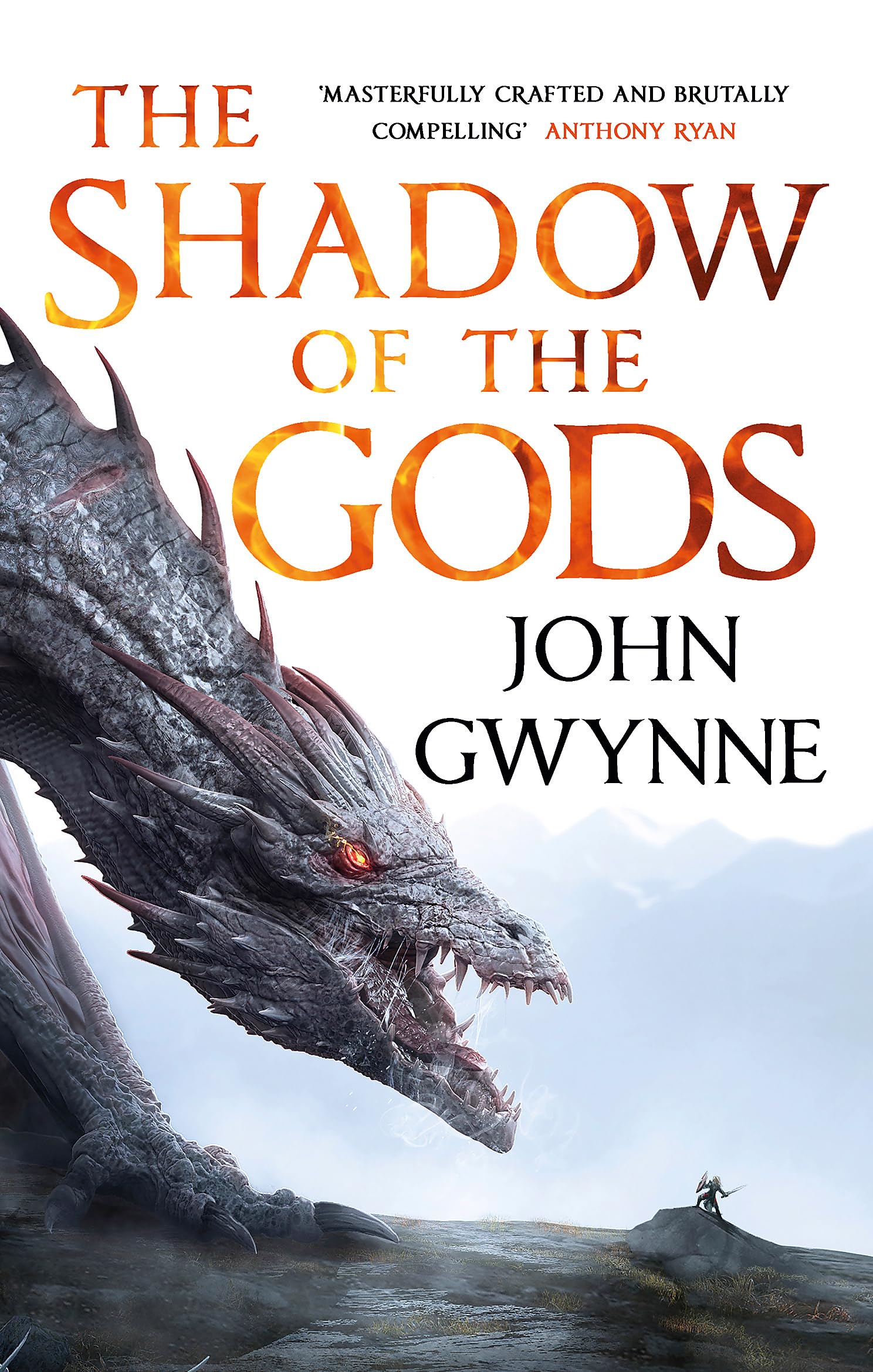
‘The Bloodsworn Saga’ is a trilogy by John Gwynne that consists of ‘The Shadow of the Gods’ (2021), ‘The Hunger of the Gods’ (2022) and ‘The Fury of the Gods’ (2024). It is a Norse-inspired epic fantasy novel that had me in a vice-like grip. I was so glad as I began to read it that I had waited until the series was complete before starting it. I am a fiend for immediate gratification and hate having to wait to find out what happens next.
‘The Bloodsworn Saga’ is a split-narrative novel which explores multiple threads of an interconnected story, initially following three main characters: Orka, Elvar and Varg.
I came to know about this book via TikTok and was pitched the series as an epic quest of one mother willing to fight the gods themselves to save her son when he is kidnapped. I was sold, and I was not disappointed. This series has many layers of friction, conflict and individual scores to settle, but, had Orka not loved her husband and son as much as she did, the events of the rest of the series would never have come to be.
The first book provides readers with a rich and vast insight into the politics of the world, where children sired by the long-dead gods were considered Tainted and were often thrilled and forced into slavery, or made to conceal the extent of their natural-born talents in fear of being sold into slavery.
We follow an escaped thrall, Varg, as he attempts to find out who killed his sister, Froya, who was sold by their original slaver, onto someone else, and joins The Bloodsworn, a mercenary band in order to access their seior (pronounced s- eth-or) witch, a woman blessed with the ability to access and weild the gods’ power naturally.
Meanwhile, Elvar, a runaway and her kin from her mercenary band, The Battle-Grim, are hunting Tainted to sell them into slavery. Elvar acknowledges she struggles with the nature of this, especially when she encounters Uspa, a seior witch, her Tainted husband Berak, and their young son, Bjarn, and knows the fate that will befall them, in selling Berak to her estranged father, the jarl of an impressive and expansive part of the country.
Early in the story, readers become familiar with what is considered normal life for Orka and her small but strange family. While she, and her husband are large and impressive people, they are reclusive and do not often travel into their nearest city. They are spiritual people and associate with creatures that others may fear, having befriended a poisonous creature called a spertos, named Spert, and a tannur, a winged rat-like creature named Vesli. Upon finding out a neighbouring steading had been set aflame, and a child was stolen, Orka seeks to notify the jarl, Jarl Sigrun and her drengrs. Not long after, her own son, Breca is kidnapped from her secluded steading, and her husband, Thorkel is slain by a mysterious warrior who only left his axes behind. She embarks on a quest to recover her son from his kidnappers, even if it feels impossible.
The series follows each of these characters trying to achieve something seemingly impossible. Varg wants to avenge his sister, Elvar wants to be a respected, powerful woman that the world will remember, and Orka wants Breca back. But, throughout the story, people get in their way, and the characters’ paths entwine as they unite against common enemies.
I absolutely adored this series. I was ranting and raving to anyone who would listen to me about it before I’d even finished the first book. I knew this series was going to be hard to beat for me, and would be an easy favourite.
There were so many interesting elements that helped in the immersion of this world, from the clear influence the dead gods had on life before the events of the trilogy to the kennings – thought cage being an alternate way to express one’s brain was so clever, and the ways in which characters acquired titles and or surnames. Offline I am known for being somewhat obsessed with the way surnames are formed, so seeing the characters in the Bloodsworn Saga have the full range of surnames was so interesting! The fact that Breca called himself Breca Thorkelsson didn’t go unnoticed. It is actually one of my favourite things to geek out about! As readers know, Breca is the son of Orka and Thorkel, the surname Thorkelsson exists as a clear nod to his parentage on the off-chance he encountered another child with the same given name. This still happens today with the surname Thompson – which began as Tomsson. They are called patronomyic surnames. Characters with their name referring to their infamous trait, or an accolaid refer to descriptive surnames, like Einar Half-Troll, named as such due to his height. Then there are people like Varg, who, when confronted by his slaver’s son, and supposed rightful owner, Varg is referred to as Varg Kolskeggsthrall as a surname, which makes it similar to modern occupation-based, or sometimes called aptronymic surnames like Carpenter or Smith.
I really enjoyed the subtle, nuanced relationship that Elvar has with the thrilled characters she encounters, including those she shackaled herself. Her struggle with the ways of the world and her internalised fear that she will perpetuate the same abuse her father did onto those around her echoes through her narrative, particularly in the dialogue between Elvar and her confidants: Grend, Uspa, Biorr and Ulfrir. The way Elvar behaves, while echoing her former privileged upbringing, also demonstrates an inherent kindness and sense of respect she has for those around her. Elvar respects Uspa, and not just because she was manipulated into a blood oath to save Uspa’s son from his kidnappers, but because she is wise, clever, and insightful. Other powerful characters lack that semblance of respect for the Tainted, such as Jarl Sigrun, who treated her thralls like animals.
The found family aspect of Varg’s journey with the Bloodsworn made each character death harder to navigate, even when it came to characters that Varg knew fleetingly. Gwynne wrote the deaths of each individual during Varg’s time with the Bloodsworn with reverence, to the point that I mourned a nameless hound with him, as I did when Varg found out about each of his fellow Bloodsworn’s deaths. Some, however, were on another level.
While I will say that many of the character deaths were emotional, such as the hound’s, many of the deaths were inevitable and predictable. After the first book, I accurately predicted three characters’ deaths, because the narrative arcs they had found themselves on were too compelling and well-rounded to not result in their own demise. Saying that, I predicted a number of other characters would die, and was surprised to see them survive the series. Perhaps that is the cynical writer in me, but I must say that despite this prediction, it didn’t take me out of the story, I was still compelled by the tale that Gwynne told like I was a captive audience listening to a skald song.
I loved this series. It encapsulated the means in which a mother would go to protect her children, from multiple perspectives and broke my heart in the must empowering, gut-wrenching and cathartic manner I could imagine. I cannot wait to get my hands on more sereis’ by Gwynne in the future, and guarantee to anyone who encounters me in the real world that I will not be shutting up about this trilogy anytime soon.
 Imogen L. Smiley