Why A Character-Driven Story Was The Best Move For ‘Squid Game’ Season 2

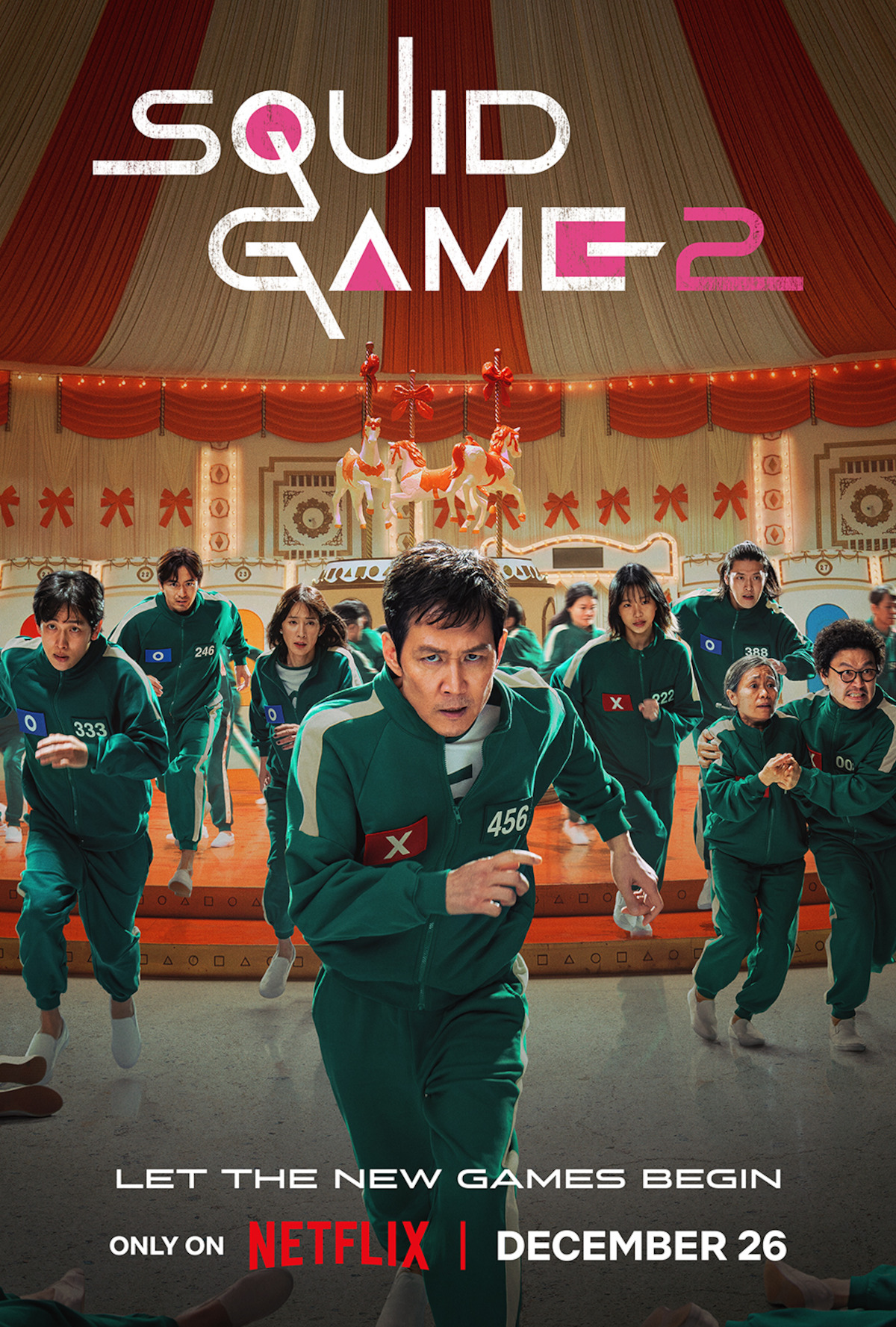
‘Squid Game’ was initially released in 2021, with its second season, released on 26th December 2024, achieving a whopping 68 million views during its premiere week.
The first season was fantastic, leaving fans on the edges of their seats, desperate to know what would happen to Gi-hun after he refused to get on the plane at the end of the series. Would he go after the salesman or the frontman? Would he try and destroy the games from the inside? What would that mean for his crumbling relationship with his daughter Ga-yeong? Could she forgive him for breaking yet another promise?
‘Squid Game’ drew acclaim for a variety of different reasons, from the extreme violence, the gut-wrenching story of extreme debt, and the lengths desperate people will go to, not only to survive, but to win, and the games the contestants played.
In the first season, the fates of the main quartet, Seong Gi-hun (Player 456), Cho Sang-woo (Player 218), Kang Sae-byeok (Player 067) and Ali Abdul’s (Player 199) characters were foreshadowed by the events that took place between the first and second games, when the games were paused and all remaining contestants were sent home for a grim reminder of the cruelties of their current situation.
In the first season, Ali (Player 199) hadn’t been paid by his employer for months and stole back the pay packet that was rightfully his. In the tussle, Ali’s boss ends up getting severely injured. Knowing he’d be a fugitive, Ali sent his wife and one-year-old son away for their own safety and returned to the game. When he returned to work, for a boss that was exploiting him, it foreshadowed that his kindness and willingness to see the good in others would get him killed. In Episode 6, while playing marbles with Sang-Woo, Ali is deceived into giving away all of his marbles.
Similarly, Sae-byeok (Player 067) returns to interrogate the people smuggler that was supposed to be helping her bring her mother across the border from North Korea. During her confrontation, the smuggler apologised to her, saying that he didn’t anticipate his contact would run away with her money, but, unfortunately, it happens. Sae-Beok threatened him with a knife and returned to the game with the hope she could win. This foreshadowed Sang-woo taking a knife to Sae-byeok’s throat during the night before the final game, mortally wounding her after she had sustained grievous injuries during the glass bridge game.
Sang-woo had been tracked down to a hotel by the game runners during the break between games, where he was drinking and smoking to excess in a bath, intending to drown himself. However, the attempt on his life is foiled when he receives the calling card.
Then there is Seong Gi-hun. During the break between the games, he grows more desperate to help his ailing mother. When he attempts to borrow money from his friend, Jun-bae, he doesn’t snub his friend when he refuses. Similarly, he chooses to offer to share alcohol with Oh Il-nam (Player 001) after running into him on the street. He is stuck in a rut after losing his job after his boss laid him off, but he’s trying, even though he has a gambling problem. This foreshadowed how even when the odds weren’t good, Gi-hun did the best he could for everyone, ensuring Il-nam wasn’t killed before playing marbles due to an odd number of players entering the game. He also did his best to keep Sae-byeok alive even when Sang-woo tried to slit her throat, begging the guards to come and give her medical attention.
In the second season, the way that the story is told is altered, and different storytelling devices are utilised. The message of the show is made even clearer for the audience through the re-introduction to the salesman. He is Gi-hun’s best chance of making his way back into the games, so, he spares no expense trying to find him, allying with a former loan shark and his colleagues to try and get an invitation and infiltrate the games.
The salesman is an innocuous figure that blends in among a crowd, his mal-intent well disguised behind a seemingly innocent face. It is only through meticulous searching that Gi-hun finds him again.
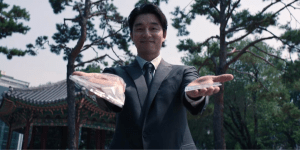
When he wasn’t convincing people to play, the salesman buys lottery tickets and bread rolls and offers them to homeless people, and while a few of these characters accepted the offer of bread, most took the lottery ticket, and were surprised when the salesman threw the bread on the floor and trampled it, a microcosm for the games as a whole.
While viewers have critiqued this scene and the actions of the homeless characters in the game, wondering why they would seek what is effectively a one-in-a-million chance over a meal, it is in a similar vein to the idea of giving a man a fish versus teaching him to fish, if you give the man food, he won’t be as hungry, but if he wins the lottery on the scratch card, he’d likely never go hungry again. That is the idealistic hope that these characters hang onto.
Just like the characters in the games. It is such a compelling and heartbreaking way to remind the audience just how brutal this game is. Especially when you do the conversions from won (₩ – KRW) into dollars ($ – USD) or pounds (£ – GBP).
At the start of the games, in both seasons, the sheer enormity of a character’s debts are broadcast, to not only shame contestants, but indicate they are all in the games with the same intention: to win money to improve their lives. In the first season, The Square Guard lists the debts of several players, the lowest of these debts being 540 million KRW. Meanwhile, in ‘Squid Game 2’, The Square Guard names Player 196, stating she owes 45 million KRW, over ten times less than the lowest amount named in Season One.
Now, this can have many implications for the audience. Considering that Player 196 is young (the actress is 27 years old) and owed 45 million KRW, it demonstrates the way that the international cost of living crisis can lead younger people into immeasurable debts they cannot escape. Similarly, her attitude to fashion, declaring that the pink jumpsuits the guards wear are “cute as Hell” (English Dub) or that she “like[s] pink” instead of teal green. She is an interesting character who could be implied to be vain, self-centered, and focused on her image, therefore liable for excessive spending.
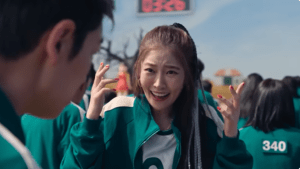
This, along with her self-confidence could also be considered a frivolous depiction of Millennials, particularly for Western audiences, and the lack of potential for them to get onto the property ladder. While people of older generations critique them and claim they cannot afford homes due to spending money on avocados, streaming services, and iced coffee. She is shown to be pretty, stylish and well-kept, a great potential example of someone to be criticised for her choices, like buying colourful hair dye and or extensions instead of saving for a house. After all, in the footage provided of her playing ddakji with the salesman, her hair is darker, implying since meeting the salesman, she spent money she evidently doesn’t have on dyeing her hair, when she owes people money.
I say this as she distinctly does not go out of her way to call out Player 333 for his behaviour before joining the games, leading to several other contestants needing to play, too.
Player 196 was the first player eliminated during ‘Squid Game 2’, and she died owing just 45 million KRW, which is approximately $31,000 or £25,000. While this is still an astronomical debt to hang over a person, many students in the UK leave their degrees owing £21,000 just in tuition fees, with varying maintenance loan figures. I owe more money as a graduate than Player 196 did, and although the circumstances of these debts may be different, it is a huge slap in the face as a UK viewer. Which is likely part of why they did it. To see someone so young, like Player 196 die for the chance to settle such a comparatively small debt, and her life, along with the other ninety eliminated players in the first game, be cast aside by other players when they found out how much the players would make if they left the games.
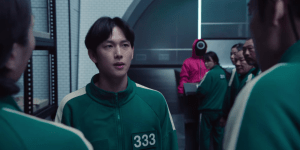
While there are plenty of things that viewers can assume about Player 196 in her fleeting screen time, there is clearer characterisation, and messages that are shown when reflecting on the actions of Lee Myung-gi (Player 333). He a former YouTube cryptocurrency broker encouraged his subscribers to invest in ‘Dalmation’, a new cryptocurrency.
At the beginning of the season, he calls the guards out for their having confiscated the players’ phones, outraged that the worth of his crypto investments could plummet during the games. During Season Two, Episode Three: 001, Player 333 is identified as being the reason his former YouTube subscribers lost a compiled total of 15.2 billion KRW, up to 1.19 billion KRW potentially being attributed to Player 230, Thanos, who blamed Player 333’s advice on being the catalyst for his debts and him joining the games. It is also said that Player 333 is wanted for fraud.
Thanos’ companion and fellow comic-relief character, Nam-gyu (Player 124) expressed that the people who created ‘Dalmation’ left Korea and fled to the Philippines with the money that they made from the coin, and, while Player 333 owes 1.8 billion KRW, of his own, which may or may not have been invested in ‘Dalmation’ and other cryptocurrencies, he was left behind.
During the first vote, Player 333 agrees to stay in the games, however, it isn’t until afterward that he realises that Player 222, his ex-girlfriend Jun-hee, who had also invested in ‘Dalmation’ had found herself in the games, too, and had voted to leave. He hadn’t realised he had put her life on the line for the sake of these games, knowing the risk to himself and everyone else. Jun-hee called him out on his choice, and yet, during the next game, he sought her out immediately, only to be shot down during the second game, leaving him to hope she and his unborn child survive, since she refused to depend on him.
After that game, Player 333 voted to leave the games, going from likely wanting to make enough money to leave the country and escape from his crimes, to facing up to the fate that awaited him to do his part to ensure the safety of his ex-girlfriend and his unborn child, regardless of the consequences. Including his imminent arrest for fraud.
Gi-hun’s friend Sang-woo (Player 218 from the first season) was also wanted for fraud. Which made for an excellent direct comparison. While the circumstances of the fraud were different, with Sang-woo stealing money from his clients directly, and investing it elsewhere, Myung-gi seemed to be committing fraud by encouraging people to invest in something that didn’t necessarily exist. However, what sets them apart was that in Season One, Sang-woo refused to call a vote when he and Gi-hun were the final two and more than capable of ending the games and saving both of their lives. Sang-woo decided, instead, to kill himself, knowing Gi-hun wouldn’t kill him.
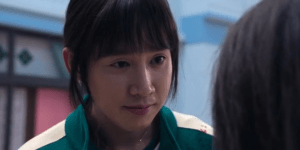
‘Squid Game’ Season 2 has a clear human element to it, which makes nuanced character development stand out, which may have otherwise been ignored. A personal favourite of mine is the development of Hyun-ju (Player 120). In Season Two, Episode Three: 001, she is said to owe 330 million KRW, which equates to approximately £184,000 and $226,000.
During the six-legged-pentathlon, Hyun-ju plays the final leg of the race and demands her audience look away from her as she plays jegi. However, in the season finale, Hyun-ju comes into her own, taking on a leadership role, reminiscent of her job before her transition, where she was a first-class sergeant in the ROK special forces. She chose to make herself known as a soldier and chose to make herself known as a leader, drawing the attention and respect of the other people who sought to leave, but also the attention of the remaining players, who watched her show everyone how to use a machine gun.
This is important, at this point, to acknowledge something that isn’t necessarily well-known, and that is that National Service is compulsory for able-bodied men in South Korea. most of the people Hyun-ju encountered when they were choosing to fight, appeared to be older than her and likely did their service from anywhere from ten to thirty years before they entered the game. It is important to note this, because both Player 222 and Player 149 discourage men they care for, (in Player 149’s case her son. Player 007, and in Player 222’s case, her ex-boyfriend and the father of her child, Player 333) from participating in the fighting at the end of the season. Despite both of them being younger, and potentially fresher out of their service than the men in Hyun-ju’s line-up.
Furthermore, in my opinion, the best, and most powerful aspect of ‘Squid Game’ being character-driven is that it has evoked the desired audience response: viewers are outraged that the season ended after three games and with a cliffhanger. However, with there only having been three games: red light, green light, the six-legged-pentathlon, and mingle, as opposed to the ‘advertised’ six games, makes viewers frustrated, antsy, and eager for more.
I felt like ‘Squid Game’ season two was meticulously planned with its overarching message in mind. Almost every flaw I have encountered on social media, criticising the series for ending after three games or repeating a lot of the same games or motifs as the previous season, was deliberate: for example, watching the second season of ‘Squid Game’, especially if you had just rewatched the first, as I had, leads viewers to acknowledge how inevitable some of the events would be, and having a varying response to each similarity, from The Square Guard identifying players and listing their debts, to players begging to be released after the first game, and characters who groveled for their lives changing their minds when they saw the sheer amount of cash they were willing to gamble their lives on.
In Season One, Player 212, Han Mi-Nyeo got on her knees, begging to be let out of the games to go home and register her baby’s birth. However, upon seeing how much money she could make, she voted to play on and returned to play again when she received a calling card. The same thing happens in Season Two, with the vote to remain and play on being greater than the vote to leave the games. While these repetitions may have initially been considered boring, that was the whole point. Viewers are guilty of wanting this aspect of the show to hurry up and let the games begin or continue.
Similarly, in the fallout between Season Two, and the pending release of Season Three, viewers have taken to social media, speculating about what will befall the characters in the remaining three games. Viewers learned from Season One, that the walls in the dormitory provide insight into the games that will be played in the future, with images on the walls depicting the varying games, concealed behind the various bunk beds. With the audience knowing this, and having seen three of the previous games, the remaining images have been a cause for debate since. This was also deliberate. It brings the message of the series forward again.
In Season One, the V.I.Ps watch some of the games live towards the end of the series, speculating about what will be next as they look down their noses upon the desperate people longing for a chance to survive and escape poverty. Just like the audience watching the second season, wanting more violence, gore, and tough decisions. We are the V.I.Ps now; detached from the magnitude of the choices characters made, watching with a sense of omnipotence, self-righteousness, and holier-than-thou criticism of the characters’ behaviour and actions, voicing our thoughts, opinions, speculation over who will live and who will die, and to bring the whole point home, engaging in the same avid and desensitived consumerism that is being critiqued: buying the teal green tracksuits from fast fashion brands and wearing guard costumes for Halloween.
The V.I.Ps want more: more violence, more hard decisions, more conflict, and suffering, to allow them to be disillusioned with the fact that one of these lucky players is getting the chance of a lifetime to better their lives. It’s such a compelling kick in the teeth that brings the message home. I applaud the creators for it!
While many complained about ‘Season Two’, I loved it. It had so much to say, and I am sure that ‘Season Three’ is going to be similar in that respect.
 Imogen L. Smiley