Book Review: This Poison Heart Duology
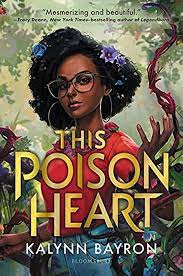
The ‘This Poison Heart’ duology by Kalynn Bayron consists of two urban fantasy novels, grounded in Greek mythology. The first book, ‘This Poison Heart’ was released in 2021, and the sequel came out the following year.
The story follows Briseis, a teenager being raised in Brooklyn, New York by her adoptive mothers, who she calls Mom and Mo. But, Briseis has a peculiar talent: plants bend to her will, she can make them grow and obey her, whether she’s willing or not.
So when Briseis and her mothers are contacted saying her biological aunt, Circe, has passed away and Briseis has inherited her estate, the family jump at the opportunity to move out to the sticks, let Briseis “stretch” and release the tension from restricting her strange powers, and learn about her biological family, should she want to, and with a drastic $1000 increase in their apartment rent on the horizon, it seemed like the perfect chance to start a new life, on Briseis’ terms.
I really enjoyed these books, I read them back to back after getting them from my local library and what interested me was how the first book focuses on strong characters who seek discovery, understanding, and friendship. It is demonstrated from the get-go that Briseis didn’t really have friends in Brooklyn, they were afraid of her power. Meanwhile, local boy, Karter, and the mysterious Marie are eager to embrace her.
The first book is imbued with so much mystery and self-discovery. I loved how by the end Briseis has gone from being afraid of her potential, and hurting others, to understanding her gifts, the powers she wields and the responsibility of her biological family’s line. It makes the contrast between book one and book two so rewarding, like getting to indulge in all the juicy details of a training montage that would only take minutes in a film, if that, and then the outcome of a herculean task.
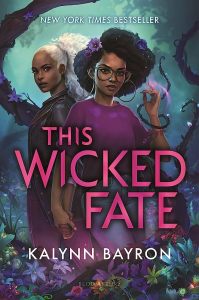
There was so much to like about both of these books, from how Bayron uses humour to establish relationship and rapport, and how in a primarily white area, Briseis is quick to let some of her walls down around the few black members of the community, humouring the situation by making references to ‘Get Out’.
Another element of the books that I loved was Marie and her unnatural lifespan and how she is adamant that historical relics ought to be returned to their native countries, and as we later learn, she actively takes part in returning these artefacts. I loved that for her!
I also loved how rich the books were with their references to mythology. As a lover of Greek mythology, many of the names in the Colchis family tree stood out to me from the get-go, and I loved how the characters echoed their original stories, like Circe having power and control of her magic, like the sorcerer before her. And I adored hearing how the family lineage was chartered all the way back to the iconic figure of Greek Tragedy, Medea, the scorned woman.
I loved the way that Briseis’ story almost flips the myths about Medea on their head, she goes on a quest, and would go to any ends to save her mother, while Medea was portrayed to do whatever means necessary to exact revenge unto Jason. Thus, arguably, demonstrating the levels of love and adoration that parent and child may have versus a lover.
I would have loved to learn more about some of the other characters, I could have easily read whole novels about Persephone or Nyx, supporting characters who share Marie’s unnatural lifespan. It was incredibly interesting and I wished there was more about them.
These books were so much fun, filled with character and I was eager to read more of Bayron’s work after finishing these.
 Imogen L. Smiley