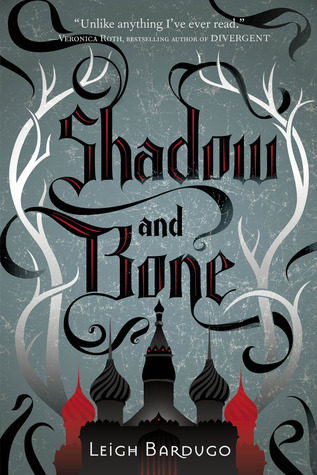
Book Review: The Shadow And Bone Trilogy by Leigh Bardugo
The ‘Shadow and Bone’ trilogy by Leigh Bardugo consists of three books: ‘Shadow and Bone’, ‘Siege and Storms’ and ‘Rule and Rising’, which were published in 2012, 2013, and 2014. They were the first books in Bardugo’s Grishaverse. The books told the story of Alina Starkov, a former mapmaker living in Ravka, born with immense, strange power. Rare power.
‘Shadow and Bone’ was an interesting story that shows multiple layers and levels to a world at war, comparing the life of the standard footsoldier, to the magically gifted Grisha, who want for nothing. As is customary in this world, all children are tested in their youth for Grisha power, however, when Alina Starkov, an orphaned peasant girl flew under the radar. It is only when she and her First Army regiment are expected to cross the fearsome Shadow Fold, a mysterious, magical abyss filled with grotesque, bloodthirsty creatures, and her life and the life of her beloved Mal, her best friend and fellow soldier, hang in the balance, that she uses her long-repressed power.
She has a fabled power, even more scarse than the standard Grisha. She is The Sun Summoner, the perceived equal to only The Darkling: a mysterious, stoic and supposedly nefarious bad guy shrouded in darkness and shadows.
Upon the revelation of her powers, Alina is stolen away to be taught how to utilise her gifts, lest she be assassinated by people from the neighbouring countries. While she is attending lessons at The Little Palace, in the Ravkan Capital, Os Alta. Far from Mal and her other friends in the First Army.
While she is training among Grisha, Alina learns that not everyone in Ravka is equal, and gains a taste for the luxurious life, and the privileges that come from being considered an asset to The Darkling. Especially when a perk of his favour is getting to kiss him.
I loved the world building. I’d heard amazing things about the Grishaverse, and once, years ago, tried to get into one of the other books from the universe, ‘Six Of Crows’ without the essential worldbuilding from this series, and didn’t understand a thing – I can’t wait to give it another go once I’ve finished this series!
‘Shadow and Bone’ demonstrates clear limitations to the power the Grisha possess, and adding the titbit that the more powerful a Grisha is, the longer they’ll live adds a lot of extra gravity to the situation at hand. You second guess what counts as power, and what makes a person powerful: is it raw strength, control over the magic you possess or something else? Furthermore, I loved the way that the Grisha’s powers can be considered beneficial to Ravka as a nation. As Fedyor explains when he and Alina speak at the start of the book, sometimes you can do good by being a healer, but theoretically, if you kill the right person, can’t you save more lives on the battlefield by using the same magic that can force a comrade’s weak heart to keep beating to cease the heartbeats of your adversaries.
I loved the mentor figures in this book. Baghra and Botkin were fun and interesting. I wanted to know more about these stable pillars in the Grisha students’ lives. I wanted to know more about Baghra particularly. Especially since she was clearly much older than most characters Alina met. Although, I must admit, I overlooked the idea she may be The Darkling’s mother.
I saw the betrayals coming in ‘Shadow and Bone’. Don’t get me wrong. But I wanted to be wrong. But as much as I liked seeing how luxury, wealth and power could corrupt Alina, I loved how she was drawn back to Mal every single time, and how he helped her understand her power, whether he knew it or not.
The second book, ‘Siege and Storms’ came out in 2013 and continues telling Alina’s story. Having thwarted The Darkling and escaped his thrall and control, Alina and Mal fled Ravka.
‘Siege of Storms’ was a fantastic blend of politics and action. I loved getting to know Sturmhond on the Volkvolny, and how he establishes a rapport with Alina and Mal throughout their voyage across the True Sea to West Ravka. His character is incredibly interesting, and endearing. The idea of a man who always wants more, but not because he thirsts for power, but because he yearns for adventure and progress, is a great contrasting figure when compared to some of Alina’s other potential love interests. While Mal was happy being a soldier, and having a purpose, and his restlessness made him and Sturmhond kindred spirits, it is that yearning for more which makes him more like The Darkling.
My favourite character in this book was easily Nikolai. His easy wit, charm and ability to be whoever he’s needed to be was compelling and exciting. I loved watching him switch personas as easily as breathing. It was easy to love his character, that’s the point, of course, and it is done so incredibly well.
Another element of this book that I loved was that how Alina’s return to The Little Palace, a place she once felt like she was safe, and could be comfortable, was suddenly so foreign to Alina. It was fascinating to see how Baghra interacted with her after she failed to kill The Darkling. She was dismissive and angry, having been blinded by her son for her crimes. He clearly had more anger in him, and could have killed her. But he is sentimental. There’s humanity there. Somewhere.
I won’t lie, the fact that the relationship between Alina and Mal still teetered in some strange will they won’t they mess was exasperating. I don’t care enough about them romancing each other to fret about if he kisses her. Loyalty runs deeper than romance or religious fanaticism. And yes my favouritism and preference for the morally grey charismatic leaders swayed me, making me frustrated that Alina was so in love with Mal she wouldn’t consider Nikolai.
Despite my qualms with Mal and Alina’s relationship, I have been incredibly interested in Mal’s character. Due to being by his side throughout this book, the readers grow to understand what it means for him to supposedly fit in everywhere. He isn’t comfortable. He isn’t settled. He isn’t some pragmatic extroverted talent. He doesn’t want to lose the only constant in his life. Again.
Unlike the first book, where I saw the deceptions and betrayals coming, I was excited to see that instead of seeing what was coming from a mile away, the possibility was dangled in front of the readers, and I didn’t put the potential issues together, and connect the dots. I was excited to be surprised, as I worry that sometimes my reading experiences can be spoiled by expecting the twists, like I foresaw what happened with The Darkling. I was glad to be kept on my toes with ‘Siege and Storms’.
The last book of the series ‘Ruin and Rising’ followed on from The Darkling’s siege on The Little Palace and Os Ulta. With Alina being hailed a saint who survived death, not once but twice, and two of her guards being revealed as believers in her divine talents and followers of the religion forged in her honour, her head is a mess. And to make things worse, she can’t summon light so far undergound.
Alina and David ponder the reaches of possibility when exploring the old journals of Saint Ilya, Ilya Morotsova, the man who made the three amplifies, the stag, the sea whip and the firebird. They ponder how much of his work was hereticism and lunacy, and why the work seemed incomplete.
I liked that in having lost so many Grisha, the remnants of the Second Army are banded together like a bunch of misfits. It offered tonnes of room for character growth, particularly with Zoya, who had sided with Alina when the time came, but was still fed into the mean girl trope. The rapport and character development and voice demonstrated in the scenes, particularly with Alina and Zoya showed many more layers to her character. Like when Alina leaves their hiding spot to cry, Zoya, who likely had the most formal military experience, called Alina out on abandoning the group. To which Alina admitted she just wanted some time alone to cry. It shut Zoya up immediately and she declares “next time, take me with you, I could use a good cry”. Understanding. Empathy. Humour. The hostility is gone. I loved seeing it.
I knew that since it was the end of a trilogy, characters were going to die. It is a tragic element of getting invested in a series and I didn’t want to deal with it. Mostly because I had a feeling Baghra would die. She’d lost her sight. She’d lost her home and her son. She had given up so much in a bid to help Alina. And it seemed inevitable. I still hated it though. Her sacrifice for Alina and Nikolai and the future was gut-wrenching. And the way The Darkling blamed his mother’s demise on her, and forced her to feel even a slither of that pain was petty, childish and painful.
I liked getting more scenes seeing the depth of the relationships between the characters, forming. I loved how after Baghra died, the group gathered to share stories about her, this infamous, cruel, strict teacher. I loved how each of the characters that trained at The Little Palace had stories to tell. Each anecdote reinforced their characters. Though, my favourite was David’s. His declaration that Baghra refused to teach him and entertain his curiosity was just a fantastic nod to how David’s thirst for knowledge is similar to The Darkling’s!
This series was a great introduction to the world. It offered a broad scope of opportunities and potential for characters to grow and hone their powers. I loved Genya being able to develop poisons, not to show David how much she loved him and listened to him, but because she was given a mission. She devloped that skill herslef, and when she and David can finally discuss what she did, it seemed that she really had a weight off her shoulders and could be the same Genya Alina knew from the start.
The scope of potential in this world had me wondering if there’s dim levels of Grisha power in everyone that makes them talented in whatever field such as Mal’s skill in tracking, it would certainly blend in well with the ever-growing worldbuilding that Bardago laid out. That pulsing shock Alina felt when she touched Mal toward the end of ‘Siege and Storms’ even had me wondering if perhaps he had amplification abilities, or was a descendant of Morotsova! I had no idea I’d be right about that! I was surprised. The possibilities in her series, with such an interesting world seem endless.
Though, there were still things that I didn’t like, and not just that Baghra had to die. I really hated that Alina was imbued with protagonist power, which means she is capable of grasping power without the same time and effort it might need for literally anyone else to grasp it. As soon as Genya and David explained how Alina could manipulate light to make things invisible, she understood and was able to do it, first with Genya’s boot, then with a whole airship, and then again with Misha and the rest of her army. Sure, she struggled and needed some practice to hide multiple people with her powers, but this was ridiculous! Three days in an apple orchard, and she was able to hide what was nearly two dozen people from detection! The laws of mastering a craft don’t apply to her because she is the sun summoner, she is the protagonist! It annoys me so much when that happens. Let people fail! Let them struggle to grasp power and use it correctly! It really was one of my biggest gripes with the series.
Does that mean I won’t be heading off to reserve the rest of the books in the Grishaverse? No way! I loved this world too much to let protagonist power stop me from enjoying it. Even if I was frustrated.
 Imogen L. Smiley