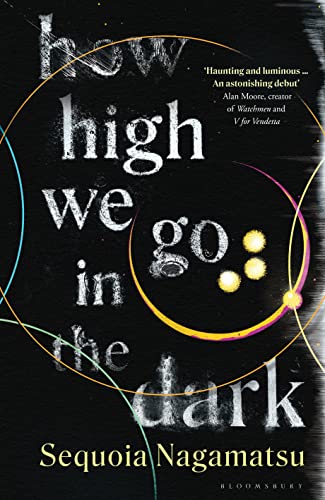
Book Review: How High We Go In The Dark by Sequoia Nagamatsu
‘How High We Go In The Dark’ is a series of interconnected short stories by Sequoia Nagamatsu. It was published in 2022, in the wake of the Covid19 pandemic, and follows an alternative version of this world, in which a prehistoric pathogen is unearthed in the body of a young girl, who is preserved in ice and excavated from a site in Siberia.
The story follows the development of this horrific virus and how the world copes with the onslaught of a pandemic that cannot be beaten under conventional means; the virus changes the matter of internal organs, transforming hearts into kidneys and killing those who have been infected. It is a nasty illness that cannot be contained. In order to cope with this illness, which children are particularly susceptible to, humanity must evolve, and science must develop. This means, capitalism, the root of contemporary society, latches onto ideas such as providing comfort or painless deaths. This includes theme parks, designed with rides that would stop a child’s heart, before their illness can kill them, and their ashes distributed in an urn for the bereft parents, and hotels to keep the ailing sick comfortable in their dying days.
The compiled fourteen stories moved me to tears. I sobbed multiple times throughout this collection of works, especially as the cogs began to turn in my head, and each of the fragments from the previous ones came to be. My personal favourite, which I admittedly only selected as my favourite because I cried more times during that piece than any of the others, was ‘Speak, Fetch, Say I Love You’, which was the story of Hollywood, a robotic dog, which contained memories and recordings of his family’s dearly departed mother, and the dog’s own ailing health, as the machinery grew unusable, and the dog malfunctioned, unwillingly forcing the family on in their mourning.
This story was melancholic and hopeful at the same time. It was filled with anguish and pain that many felt in the wake of the Covid19 pandemic, losing loved ones, fearing illness, existing in a perpetual state of panic, fearing the consequences of illness, and fearing the scope of science and the unknown. What is out there? What do we know? There are so many questions, and possibilities that linger in this body of work and the aching and yearning for a second chance, for change, for progress, and for tomorrow. It was a very poignant body of work and I would recommend reading it.
Although, of course, due to the nature of the work, it may prove too soon to consider it for those who lost so much during the height of the pandemic.
 Imogen L. Smiley