Book Review: Kaikeyi by Vaishnavi Patel
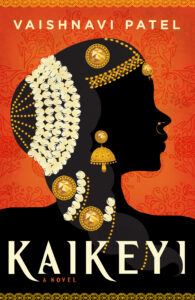
‘Kaikeyi’ was Vaishnavi Patel’s debut novel and was published in 2022. It was recommended to me whilst browsing online for other mythology related books. Despite knowing nothing about the original source material, Ramayana, I was excited to read it.
The story was immersive and exciting, following the life of Kaikeyi, one of the three wives of Dasharatha, from age thirteen when her mother is banished from the kingdom of Kekeya, and through her life, training in combat, marrying Dasharatha and her life as a mother, a counsellor and a leader that inspired social change.
The main conflict of the novel derives from the conditions of Kaikeyi’s marriage, that her firstborn son be heir to the throne of Dasharatha’s kingdom, Kosala, despite her being his third wife. But when it is revealed that Dasharatha is struggling with infertility, tribute is given to the gods so his wives will have his sons. They all quickly fell pregnant and gave birth within weeks of each other. Unlike the source material, the epic of Ramayana, I layer learned, in the novel, Kaikeyi adores all four children and co-parents Bharata and the other three sons of Dasharatha, including Rama.
I enjoyed the overarching feeling that lingered in the book where Kaikeyi is afraid of the fallout and consequences of what occurs around her. She is both deathly afraid of the gods and their wrath from stories she read in childhood, whilst also being almost indifferent to them, feeling that they have forsaken her. She is a complex character who puts the needs of her people above herself and inadvertently leaves destruction in her wake, whether it be in religious unrest or even within her own home.
I particularly enjoyed the maternal relationship between Kaikeyi and Manthara. It is Manthara who acts like a mother figure to the impressionable Kaikeyi and as she grows up becomes a friend and confidant. Their relationship is compelling and evocative, where both women can trust each other and blur the boundaries between servant and mistress. I later found that the original story of Ramayana does not offer such a positive take on that relationship, instead depicting Manthara as a manipulator and the mastermind behind some of the later happenings in the book.
I loved reading about Kaikeyi as a feminist figure that inspired great change. She was characterised as a powerful, devoted woman. It was a really exciting and immersive story that I’d wholeheartedly recommend!
 Imogen L. Smiley