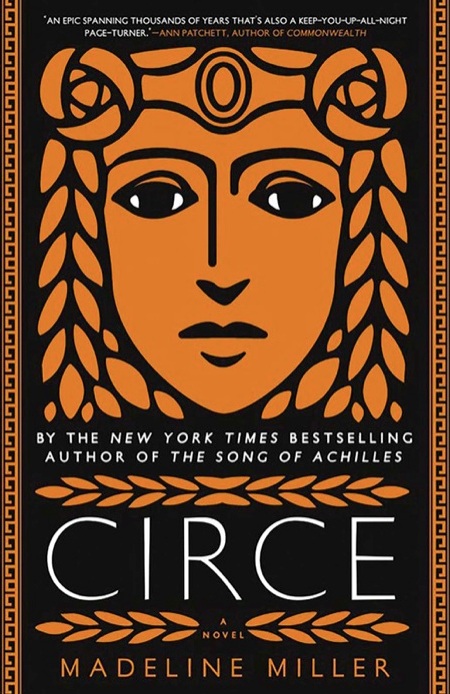
Book Review: Circe by Madeline Miller

‘Circe’ is Madeline Miller’s second novel, and was released in 2019, it follows the immortal life of the nymph, Circe, daughter of Helios, one of the few Titans who sided with Zeus in wartimes. The book begins in her childhood, lingering significantly on a meeting with Prometheus upon the declaration of his punishment for giving mortals fire to wield as their own. While Helios and his people observe the spectacle of the fury, Alecto, whipping Prometheus, the event eventually loses its gravitas, and thus the interest of the people. All Helios’ courts, except Circe, leave him. When they’re alone, she offers him food, nectar and kindness. And he confides he would still do it again, despite the consequences. This unwavering devotion to humankind is baffling, and startles the young Circe, and her observations upon encountering Prometheus are not forgotten throughout her years. Even when Helios’ halls are blessed by siblings.
As the firstborn daughter of Helios and his wife, Perses, she experiences the preferential treatment her parents offer their more beautiful and favoured children, Pérsēs and Pasiphaë firsthand. While her younger brother and sister were blessed with prophecies foretelling successful marriages, conquest, and reverence. But Circe was, therefore considered unremarkable, with undesirable traits. While Circe favoured her father’s company, Pérsēs and Pasiphaë flocked to socialise with their fellow nymphs, flaunting their privilege. Whether or not her younger sisters had company, Circe was dealt the brunt of their scorn.
When her youngest brother, Aeëtes is born, and no such prophecy was foretold upon his birth, his mother, Perses dismissed him, allowing her eldest, Circe to raise him instead. However, when Pasiphaë is married off to Minos of Crete, the life Circe knew, warts and all, was upended. Aeëtes was gifted his own island, and Pérsēs branched out on his own, leaving only Circe behind.
It is then that she meets the mortal fisherman, Glaucus, and is taken with him, falling in love during their frequent meetings. When he realises that the consequences of him being so infatuated with Circe is that his family will go hungry, he is cruel and angry, and so the first domino in the chain falls.
Upon seeking guidance from her Grandmother, who helps fill Glaucus’ nets, she promptly realises the futility of fondness toward mortals: unlike the nymphs and the Gods, mortals die. They are fated to succumb to death from the moment they are born. This inspires a new sense of fury, frantic, Circe wishes to preserve her beloved Glaucus and finds a potent plant which she forces him to drink and thus he was reborn, a water god of his own right. And his previous shared affections with Circe dwindle upon joining the immortal ranks.
This is when a hot, angry, jealousy sears Circe, and she uses those same flowers to curse the spiteful, catty, water nymph, Scylla, and turn her into her “truest self”; a heathen with six heads, with mouths filled with rows of serrated teeth, and twelve tentacle legs on her wedding day, horrified, Scylla flees and becomes the object of gossip among her fellow nymphs, and quickly becomes a sea monster worthy of fear, that would later pose significant threats to adventures in Ancient Greece for centuries to come.
Circe later admits to her transgressions and sorcery and is banished to exile, where she thrives in sorcery, herbology, botany, and the comfort of her tamed animals, including her beloved lioness. During her exile, she takes several lovers, including Hermes: messenger of the Gods, and his descendent, the great Odysseus one of the Heroes of Troy. She even has a brief affair with the great inventor Dedalus, who offered her a respite from exile on Crete to assist Pasiphaë in birthing the beast that would later be feared under the name of The Minotaur.
Madeline Miller used language to convey the ever-passing, constant stream of time, and Circe’s lack of aging in a spectacular, nuanced manner. Her inability to track time, particularly in her exile is an incredible means to acknowledge the lull from immortality. When she does meet with lovers, whether they be mortal or otherwise, the awe behind their ages is very jarring. For example, when Circe is only spending her nights with Hermes, she counts time in the form of his visits. The frequency of his visits, and the stories he provides her with insight into the wider world.
I also loved how, ultimately, most of the lovers Circe took in her immortal life, descended from that same Godly bloodline. Ironically, the son of Zeus’ descendants: Odysseus, and then later his own son, Telemachus, a man by the time he reaches Circe’s shores. And yet it was Zeus’ plight of knowing sorcery is new and daunting but killing Circe and her fellow witch-siblings would not only potentially disturb the marriages between his own bastard son, Minos and Pasiphaë, but also strip two more kingdoms of their rules, because new magic was a threat. No, it was better to make an example of Circe. He was the one who sent her into exile, and later into the arms of his descendants.
Circe’s romantic relationship with Odysseus was amazing, and the contrast between him and his sons is fantastic. The son he sired with patient, prudent, loyal Penelope of Ithaca, Telemachus, was just a baby when his father left for Troy, and the bastard he bore with Circe after a year on her island, Telegonus, whom he didn’t know existed. Odysseus yearned for fame, accolades, adventure, success, and eternal glory, having been considered the Best of the Greeks after Achilles fell in Troy. Meanwhile, his sons bear different ambitions. The son he left behind in Ithaca yearned for a domestic life of supposed insignificance, where he could do and be who he pleased. Meanwhile, Telegonus, who spent the first sixteen years of his life in exile with his mother, trying to protect him from divine threats from Athena, his father’s Patron, thus yearns for newness, adventure, and exploration, but recoiled at the idea of bloodshed, and near-resented his father for the scuffle that caused his death.
I loved the way Miller portrayed Circe’s growing maturity, perceptiveness, and understanding of the world. I loved the fact that when she meets Odysseus, she was drinking in all of the stories of valour and success and victory, but when she retells these stories, not just to Telegonus, and then again to Telemachus, the adoration, the interest, the reverence she felt dissipates. It’s incredibly clever, and the nuance in Miller’s language is fantastic.
I’d wholeheartedly recommend reading ‘Circe’, however, be mindful of your triggers as there are scenes where sexual assault and rape take place, or are attempted. Getting turned into pigs isn’t mercy enough.
 Imogen L. Smiley