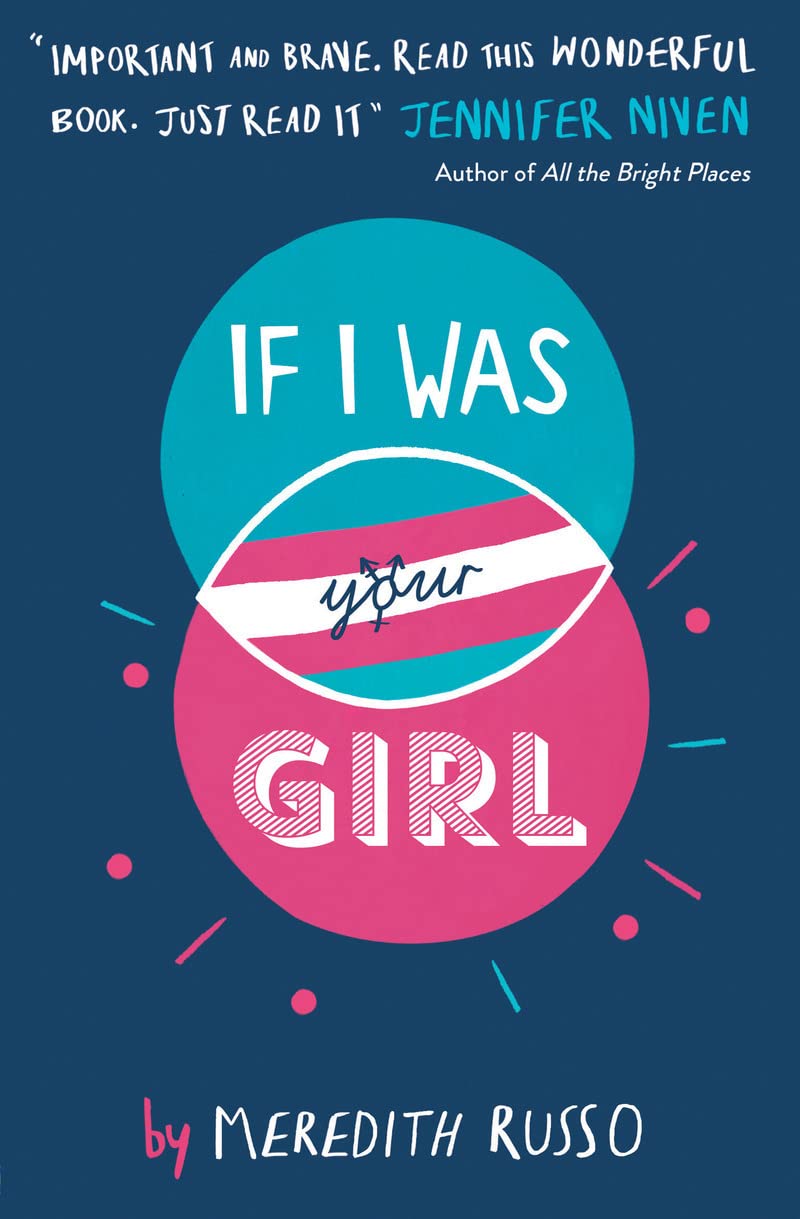
Book Review: If I Was Your Girl by Meredith Russo
‘If I Was Your Girl’ by Meredith Russo is one of the older LGBTQ+ stories you may find in your local chain bookstore. It was released in 2016 and tells the story of a young trans woman, Amanda, who is attending a new school after a tumultuous social transition.
This story is certainly a product of its time, which certainly says a lot about the so-called-genre of LGBTQ+ fiction. Most popular fiction in the early to mid-2010’s focused on the same overarching premise of “oh no, I’m LGBTQ+, how will I cope?” while now fiction that incorporates same-sex relationships doesn’t mean that being LGBTQ+ is explicitly the plot of the story. You can find LGBTQ+ characters across genres in newer releases, which is refreshing, and much more true to life. After all, life continues for LGBTQ+ people after they come out. Although there are still books that focus on that initial conflict of understanding your identity, having the option to read different stories is refreshing.
In the fast-paced world of literature and publishing, 2016 feels like forever ago.
It is, however, important to say that accusations were raised at the time about the lack of ownvoices content being released, specifically about LGBTQ+ content at the time, but Russo is a trans woman. This means that her experiences and the experiences of her characters hold more weight as she herself is someone who has undergone similar circumstances, or has the ability to take license with her own experience, twisting them to suit her characters.
This book, however, does contain triggering content, with references to violence, transphobia, sexual assault, homophobia, the explicit outing of closeted people, and gun violence.
Amanda’s story is raw and, unfortunately, true to life, an accurate depiction of the statistics that hang over the trans community like a bad omen, severe declines in mental health, and attempts of suicide for trans people who are not able to safely transition. The book explores Amanda’s journey in a series of flashbacks throughout her transition as she recalls the harrowing events she experienced when she was at her previous school, and the reality of having been on oestrogen, and having had gender-affirming surgery, and is perceived as a cis girl, as she makes friends, learns peoples’ secrets, and falls in love.
Her experiences were horrible, but in contrast, the sweet, tender moments, between the girls she befriends are encouraging and empowering. Although this book was hard to read at times, the bleak moments were illuminated by the kindness she experiences from her father, who became estranged after a nasty divorce, exacerbated by Amanda’s pre-transition spiraling mental health, and the speculation that she was gay, and her new friends, who, support one another, whether it be about body confidence when shopping for dresses for Homecoming, or being a shoulder to cry on during hard times. There was a true sense of sisterhood between Amanda, and her new friends, Chloe, Anna and Layla, who would move mountains for her. And, to make things better, they’re true to their promises to love and support their new friend.
Perhaps, I was too harsh on our strapping male-lead, Grant, who is kind, gentle and encouraging of Amanda’s hesitance when their romance begins to blossom. But, when everything comes up to the boil, I wanted him to be valiant, like her friends were, and to seek her out, and apologise for, despite dismissing her attempts of coming out to him as unnecessary, reacting poorly to her being outed.
Now, the outing. I understood that Bee was infatuated with Amanda, truly I did. Especially since Chloe made it clear Bee was interested in someone else, which was why they broke up, not, as Bee had declared, because Chloe took the relationship too seriously, even though they’d been together for a year? I knew. I knew Bee was going to be the tragic, pining, “second choice” figure that Amanda bonds with, but when she gets drunk at Homecoming and kicks off after kissing her without consent and being rejected, rather kindly, I might add, considering Amanda had a boyfriend. It was hurtful. It was nasty. It was traumatic and terrible. And to me, it felt incredibly out of character. Why would Bee be so irrationally angry that she would air everyone’s secrets at Homecoming, I could almost almost, at a push, see it potentially having it happen at prom. But not Homecoming, where there could still be ramifications on a disciplinary front. No. It felt convenient. Convenient that she, the only friend Amanda trusted outs her to everyone, publicly. No. It rubbed me the wrong way. Someone else could have done it. It would have made more sense for it to be someone else.
Despite the rage that I felt about Russo’s choice to antagonise Bee in the end, I did like the book. I did. I really did. It just…could have been better.
 Imogen L. Smiley