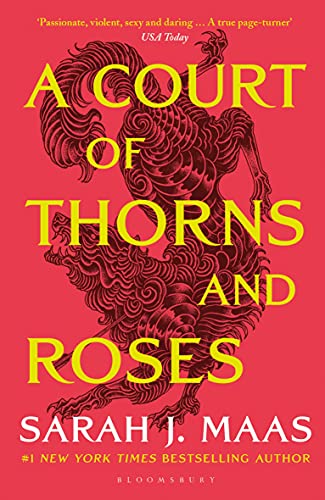
Book Review: A Court Of Thorns And Roses Series by Sarah J. Maas
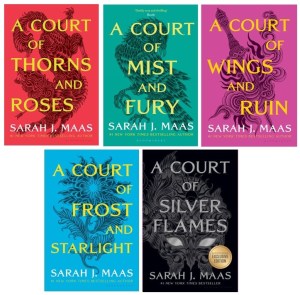
‘A Court of Thorns and Roses’, shortened to ACOTAR, is an ongoing fantasy series by Sarah J Maas, which started back in 2015. This series of what is currently five books has been a sensation among readers on BookTok’s literary community.
The series follows the life of Feyre Archeron, a mortal huntress who resides with her siblings and disabled father in a decrepit hut near the dividing wall between the Human and Faerie Lands. A family fallen from grace, due to financial ruin, Feyre found herself responsible for feeding her whole family, while still being a child herself. Her survival instinct, and desire to provide for, and support her two older sisters led her to desperate measures in the bitter winter months, and so, when she encounters a wolf, a large wolf, beyond any normal wolf, kills it and skins it, selling its pelt at the market.
This has repercussions beyond the nineteen-year-old’s wildest dreams, invoking the wrath of a Faerie Lord, Tamlin, seeking revenge for the murder of his friend, Andras. A life for a life. But, in an act of mercy, or in Feyre’s opinion, cruelty, decides to bring her across the Wall and to his Court. The events and trials Feyre embarks upon in the fallout of this decision have cataclysmic repercussions across the Fae continent, Prythian, and felt across all seven of the Fae Courts: Spring, Summer, Autumn, Winter, Day, Night and Dawn. The friends she encounters and decisions she makes will shape the continent for generations to come, that’s a lot of pressure on a girl’s mortal heart.
Now, I loved each of the books for distinct reasons, which often shifted throughout the series. For example, I enjoyed how ‘A Court of Thorns and Roses’ offers the doorway into a magical world of fae and the splendour of this realm, through the impressionable eyes of an unreliable narrator, such as Feyre, especially since, for a time, she is interacting with this world under a spell, many members of Tamlin’s house existing under a glamour, hidden from her curious eyes. The first book offers strong insights into the characters, their motivations and a glimpse into what we later learn is just a slither of this world. I loved seeing the lengths to which these characters would go through to achieve their goals, or squander those of their enemies and rivals.
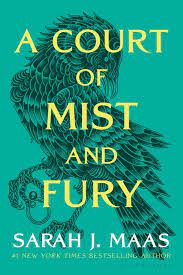
What I enjoyed most about the sequel, ‘A Court Of Mist And Fury’, is how it subverted many of our initial preconceptions about the characters. I loved seeing Rhysand through Feyre’s eyes as she heals from the torture she underwent in the first book, and how what she once considered cruelty and callousness was instead far deeper and profoundly kind. ‘A Court Of Mist And Fury’ provides a wider scope of world building and provides Feyre with a glimpse into the life she could have, with a network of friends to spend her new life with. The characterisation of Rhysand’s Inner Circle: his cousin, Morrigan, his fellow Illyrians, whom he considers brothers, Azriel and Cassian, and Amren, an entity far older and powerful than the fae that walk the lands of Prythian, are fantastic, easy to latch onto and form that rapport with to feel as if you are included among their network too.
I loved reading it. It was one of my favourite books of the series simply because of the way Maas’ characters respond to the world around them. Why did Tamlin, who needed Feyre so desperately in the first book, seek to preserve her and keep her within his manor, instead of allowing her the freedom to exist in the world she saved? Why did Rhysand, who was so harsh and bitter toward her in the first book take such a liking to Feyre during the course of this book? What lengths would they go to in order to get what they want? Are they truly that different?
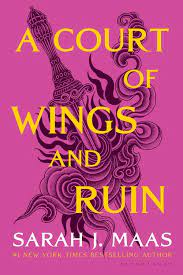
The last hundred or so pages of ‘A Court Of Mist And Fury’ had me reeling. I was horrified, but captivated, and I knew that as soon as I woke up in the morning, I was marching to the shop and buying the third book in the series. By the time I had ‘A Court of Wings and Ruin’ in my hands, I already felt that pull of anticipation. I had to know what happened next. It was exhilarating, I was already being held in a vice, captivated by every word. I loved getting to see the lengths Feyre would willingly go to in response to her sisters’ traumas.
The way Maas navigates the implications of trauma is something I will commend until my lungs are raw. She makes sure that although the characters that have encountered horrible atrocities respond to triggers, it manifests in a variety of ways. It’s easy when writing things like PTSD or trauma responses to simply almost ‘copy and paste’ the same responses for every character. But Maas has a broader scope of coping mechanisms, or trauma responses and how it manifests. There isn’t a one-size-fits-all way to react to something traumatic, and I’m glad that Maas didn’t use the same response as a crutch for all three Archeron sisters.
Furthermore, upon her return to the Night Court, former friend and reluctant ally, Lucien in tow, she is thrust into a world of inter-court politics that have only grown tenser upon her return to Spring. The ramifications of her choices, the significance of political alliances, and the growing fear of invasion in lieu with Tamlin’s own recklessness in the previous book, has significant weight to the plot. War is upon them and friendships are fragile, but the fear of being subjected to a similar oppressive rule to what they had only just been freed from, adds to the tension. It was delightfully immersive and I loved it. It was one of my favourite books in the series.
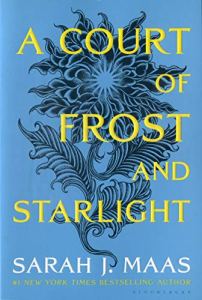
The fourth book, ‘A Court Of Frost and Starlight’, is, controversially, my least favourite of the series. Not because it’s short, poorly written, or anything of the sort, but as I ploughed through the measly 250 pages, I questioned why this book existed? What was its purpose except to be self-indulgent to the fans, and offer them the glimpses into the wider world of the Night Court that had piqued readers’ interests? I finished it feeling unsatisfied, simply wanting closure after a particularly gut-wrenching exchange between Cassian and Nesta toward the end of A Court of Wings and Ruin. If you know, you know.
Though, I cannot even begin to explain how grateful I was to get a glimpse into the festivities of Rhysand’s found family, and the culture of Illyrian men and women. Although it had been hinted in ‘A Court of Mist and Fury’, that Rhys and his brothers came up to the mountains on the Winter Solstice, getting to see what happens, first-hand, through Feyre’s eyes, was the pure, tooth-rotting fluff and I adored it. But, I really couldn’t understand why it needed to exist.
Until I started reading ‘A Court Of Silver Flames’. Nesta’s book.
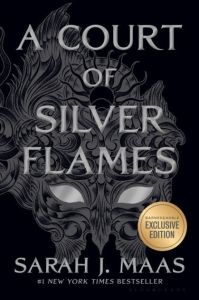
Prior to ‘A Court Of Silver Flames’, the reader experiences the world through the rose-coloured glasses of Feyre, who has been taken in by the Fae aristocracy, is, arguably further along her journey of healing from the ordeals she underwent over the past two years, has a supportive mate, partner, social circle, and position in society. She feels valued, and her reputation for her sacrifices makes her generally well-liked among the supporting characters.
‘A Court Of Silver Flames’ is the first time we get to see Prythian and more specifically the Night Court, through anyone else’s eyes. Nesta has undergone horrific traumas throughout her time among the fae, and has suffered greatly. Just as her sisters have done. And while fans of the series eagerly anticipate the opportunity to see the world through Elain’s eyes, it was seeing it through Nesta’s which provided the possibility for that to occur beyond a bonus chapter.
‘A Court Of Silver Flames’ was my favourite book, because the way Nesta responds to her trauma is unlike Feyre. When I’ve read books from multiple perspectives in the past, it hasn’t been uncommon for signatures to remain from one narrator to the next, and while Feyre had strong, physical reactions to the traumas she encountered, being kept awake by nightmares, and bouts of sickness, Nesta turns to vices to cope with what she cannot deal with. Repression. Sex. Drink. Gambling. And its this reckless behaviour that leads to her being cast out of the city of Velaris, where the rest of the Inner Circle live, either in personal lodgings, or in Rhysand’s Town House, or later his and Feyre’s River House. She is ostracised and cast into The House of Wind, which is a whopping ten thousand stairs away from Velaris, and otherwise accessible either by being carried in by Rhysand, Cassian or Azriel, or via the aforementioned daunting staircase.
As Nesta carries out this sentence of exile in the House, she learns more about herself, her strength, the powers she possesses, and how she can help exact revenge upon the people who forced her into an immortal life she didn’t choose. She befriends Emerie, who is briefly introduced in the previous book, a disabled Illyrian woman, who has had her wings clipped, and is thus unable to fly, and Gwyn, a Priestess who tends to The House of Wind’s library. And as the friends grow closer, friendships form, and Nesta once again invites Cassian back into her life, as a romantic partner, she has a lot to learn about forgiveness. Mostly, about forgiving herself.
I loved this book, it provided a refreshing take on all of the characters readers have come to know and love, as we are seeing them from the perspective of someone they aren’t seeking to impress. We see the lengths Rhysand will go to protect Feyre, and how similar they may be to her previous love interest, we see the extents to which the Inner Circle can be swayed to follow Rhys’ will, despite having existed under, (presumably) his Second, Amren, for fifty years during events that precede ‘A Court Of Thorns and Roses’, and we see more sides to Cassian, what he is willing to do for the woman he loves, and the lines he fears crossing between sacred Mating Bonds and allegiances he holds to his Court as Illyria’s most decorated general, and commander of the Night Court armies. I loved this perspective, and how raw and vulnerable it truly was. I cried many a time, and in reading it, I finally understood the need for ‘A Court Of Frost and Starlight’.
Although Book Four is indulgent, full of glimpses into the wider lives of the characters and their lives in Velaris, it provides a bridge between the horrors of ‘A Court of Wings and Ruin’, the atrocities the characters experience, and prevent, and what is to come. By offering a clear indication of what the next stage in Feyre’s life is going to be, it gives the reader the opportunity to assume why the narrator goes from being Feyre, to Nesta.
Although, I would love to see wider implications of the consequences of Rhysand’s actions in the fifty years he was in thrall with Prythian’s dictator, Amarantha, I that perhaps it was too soon in the story, even five books in, to explore those consequences. After all, most events have taken place on either a battlefield, with a greater enemy afield, or in the Night Court itself, where Rhys is adored or feared for his immense power.
I hope that when Sarah J Maas writes Elain’s story, perhaps, her connection to Lucien, a supporting character from the beginning, who has clearly distanced himself from Feyre, will offer insight into the ramifications of Rhys’ actions. How would other courts receive him? How would the people of these courts receive him? Although it is explicitly stated that Helion High Lord of Day considers Rhys a friend, that doesn’t mean that his subjects do. It’s certainly food for thought and I look forward to, hopefully getting to see what happens n
 Imogen L. Smiley